I'm a participant in the Amazon Services LLC Associates Program, an affiliate advertising program designed to provide a means for me to earn fees by linking to Amazon.com and affiliated sites.
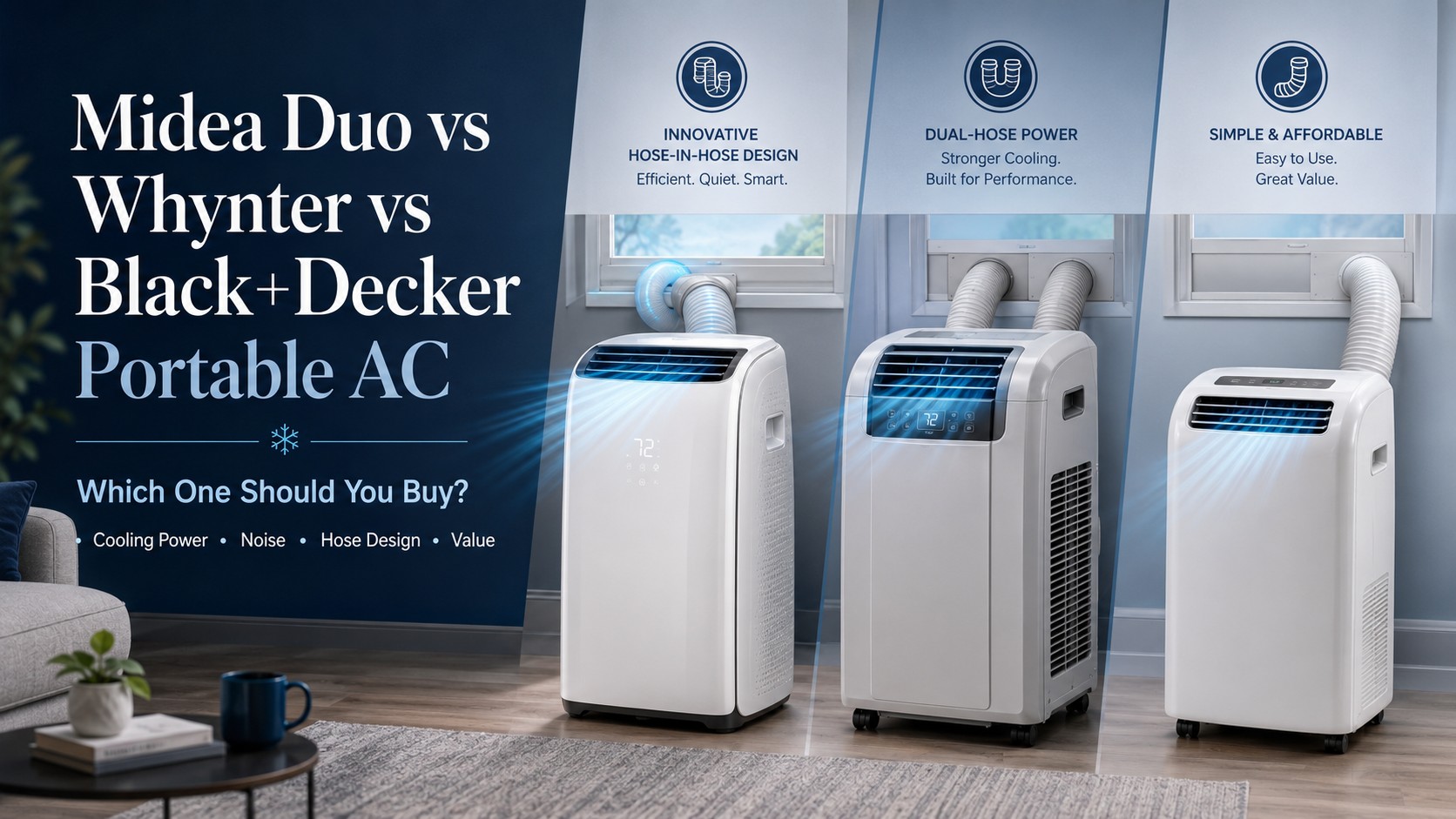
Midea Duo vs Whynter vs Black+Decker Portable AC is really a choice between quiet smart comfort, stronger dual-hose cooling, and simpler everyday value.
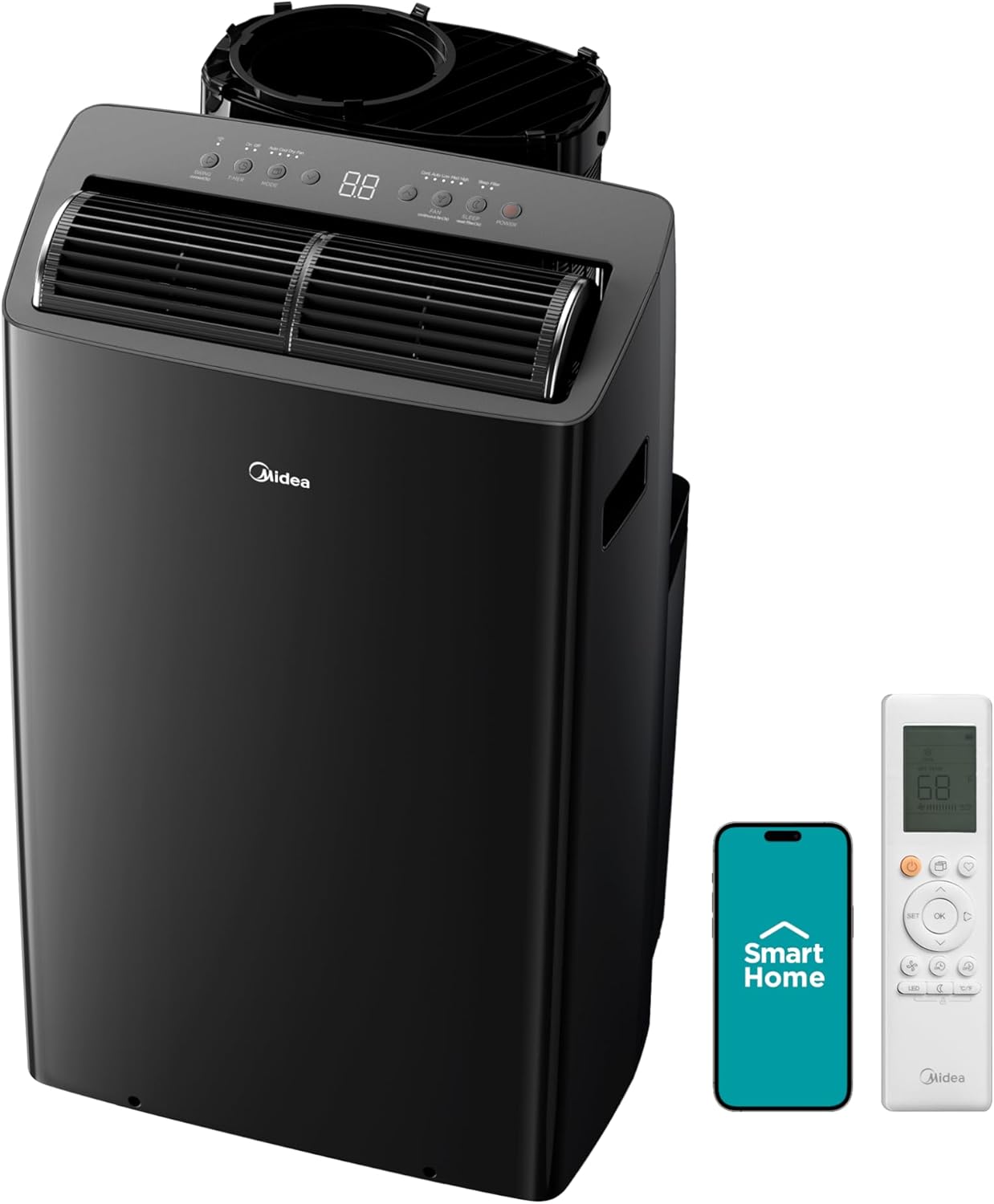
For most bedrooms, apartments, and primary living spaces, the Midea Duo Smart Inverter Portable AC is the best overall choice. It has the strongest mix of cooling power, quieter operation, smart controls, inverter efficiency, and a hose-in-hose design that helps reduce the usual weakness of portable air conditioners.
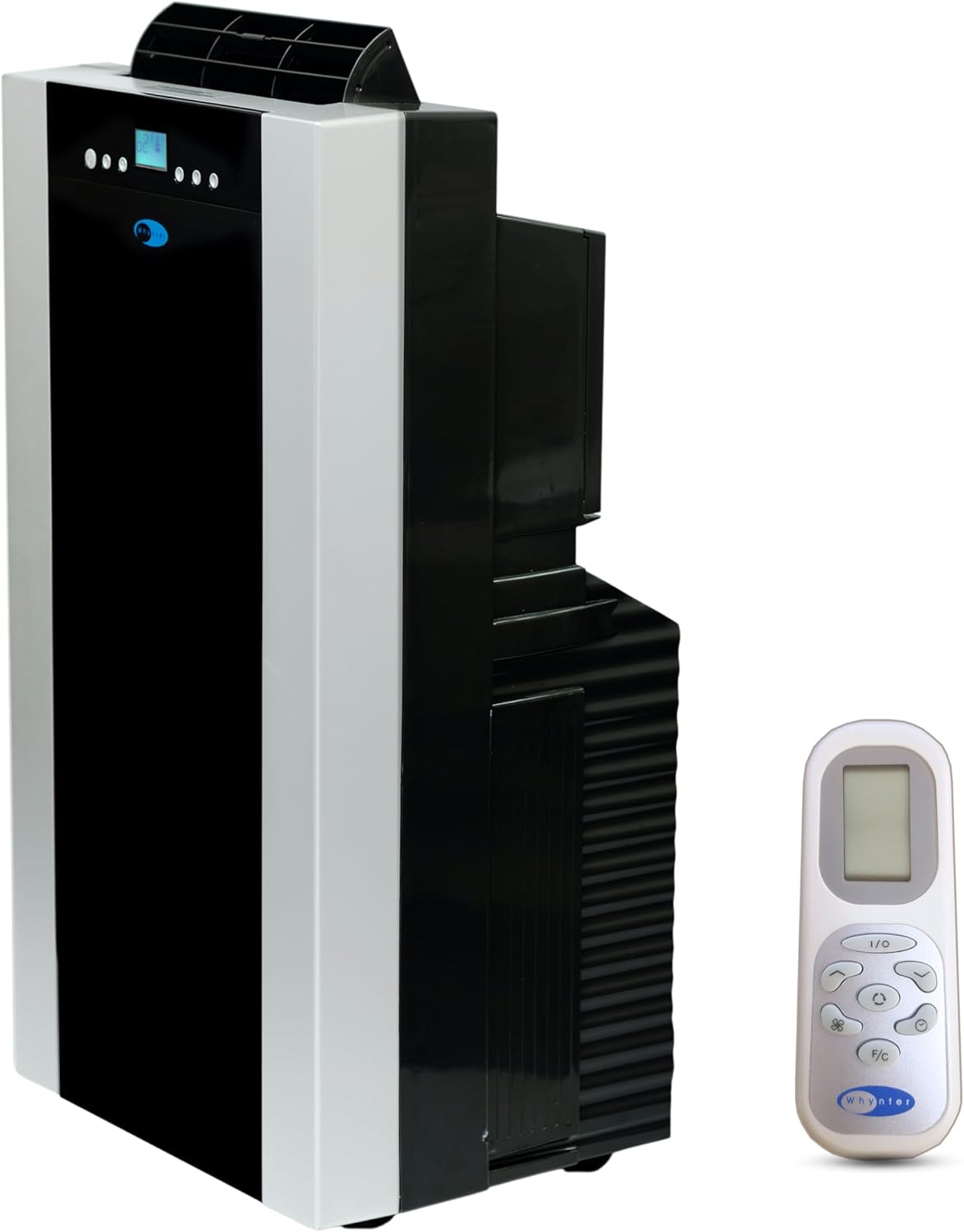
The Whynter ARC-14S is the better pick if raw cooling and dehumidifying matter more than quiet sleep comfort. It is a proven dual-hose portable AC with a strong 9,500 BTU SACC rating, 500-square-foot coverage, and 71-pint-per-day dehumidifying capacity. It feels more like a workhorse than a sleek bedroom appliance.
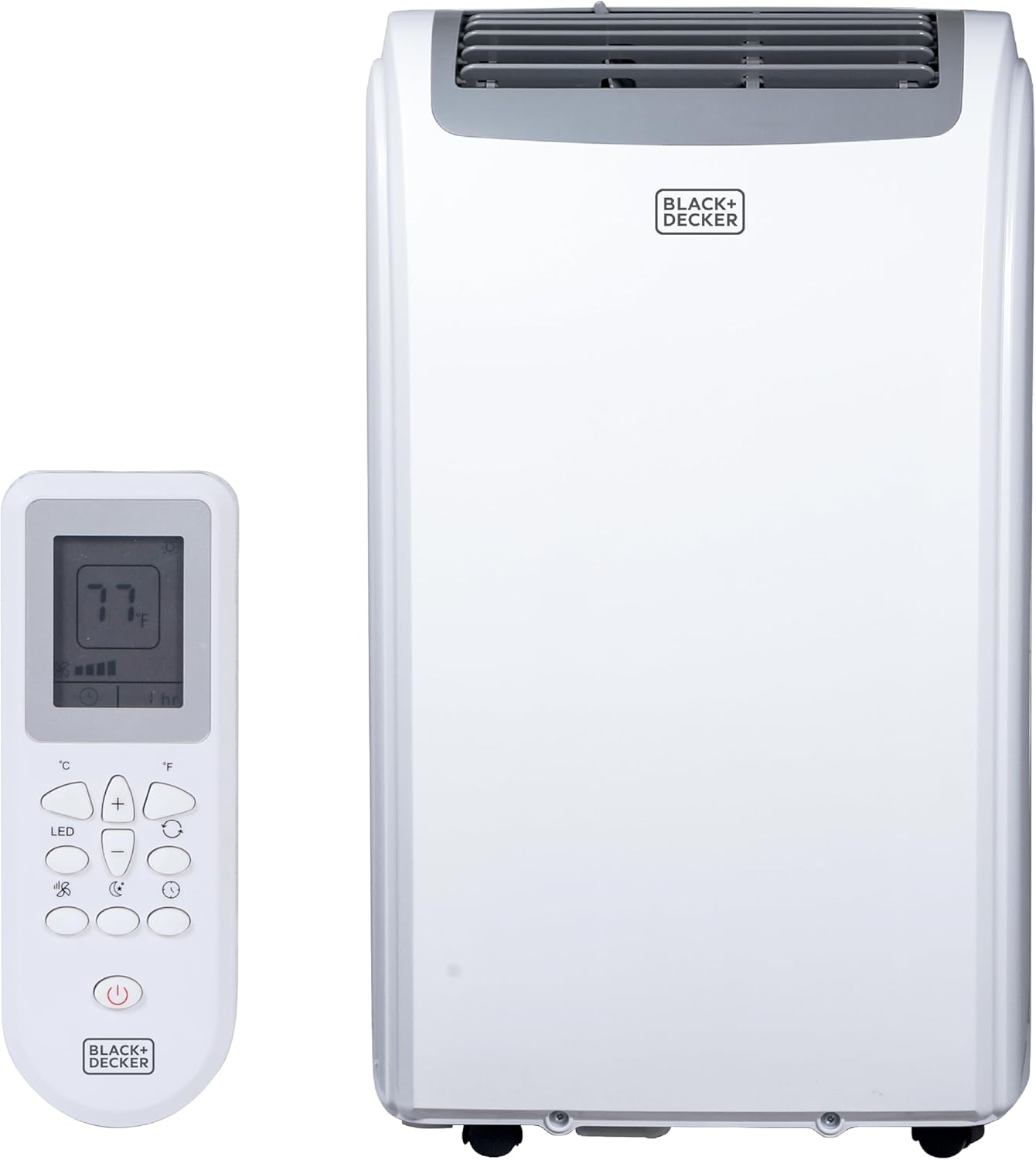
The Black+Decker portable AC is best if you want a simpler, easier-to-buy unit and do not need the quietest or most efficient design. For this comparison, I’m using the BLACK+DECKER BPP10WTB because it is one of the more direct 14,000 BTU ASHRAE-class competitors, with a 10,000 BTU SACC/CEC rating, cooling for rooms up to 450 square feet, and dehumidifying up to 90 pints per day.
Best overall: Midea Duo
Best for large hot rooms: Whynter ARC-14S
Best simple value pick: Black+Decker BPP10WTB
Best for bedrooms: Midea Duo
Best for garages, studios, and humid rooms: Whynter ARC-14S
Best if you want familiar controls and broad retail availability: Black+Decker
Why This Comparison Matters
Portable air conditioners are confusing because the biggest number on the box is not always the number that matters.
Many shoppers see 14,000 BTU and assume every unit in this class cools about the same. That is not true. Portable ACs often list both an older ASHRAE BTU number and a more realistic SACC/DOE-style cooling number. The SACC number is usually more useful because it better reflects how portable ACs perform once heat gain, exhaust losses, and real setup conditions are considered.
That is why this comparison focuses on:
- Realistic cooling power
- Hose design
- Noise
- Bedroom comfort
- Apartment use
- Humidity control
- Setup difficulty
- Long-term convenience
- Who should buy each one
- Who should skip each one
A portable AC is not just a cold-air machine. It is a machine you may sleep near, drain, clean, roll across the floor, fit into a window, and listen to for hours.
That is where the differences between Midea Duo, Whynter, and Black+Decker become obvious.
Midea Duo vs Whynter vs Black+Decker Portable AC Comparison Table
Feature | |||
|---|---|---|---|
 |  |  | |
Best For | Most bedrooms, apartments, smart homes, quieter cooling | Large rooms, hot rooms, humid spaces, stronger cooling | Simple everyday cooling, value buyers, familiar controls |
Cooling Class | 12,000 BTU DOE / 14,000 BTU ASHRAE class | 9,500 BTU SACC / 14,000 BTU ASHRAE | 10,000 BTU SACC/CEC / 14,000 BTU ASHRAE |
Listed Coverage | Up to 550 sq. ft. | Up to 500 sq. ft. | Up to 450 sq. ft. |
Hose Design | Hose-in-hose dual-style design | True dual-hose design | Single-hose design |
Noise | As low as 42 dBA | Less than 51 dBA low / less than 56 dBA high | Listed up to 58 dBA on high |
Smart Features | App, voice assistant, smart control | No app on ARC-14S base model | Remote control, timer, standard controls |
Heat Mode | Yes on MAP14HS1TBL model | No on ARC-14S | No on BPP10WTB |
Dehumidifying | Yes | 71 pints/day | Up to 90 pints/day |
Filter | Reusable/washable filter | Carbon filter and washable pre-filter | Washable filter |
Weight | About 77 lbs | About 73 lbs | About 60 lbs |
Best Strength | Best balance of quietness, power, and usability | Best workhorse cooling and dual-hose performance | Best straightforward value-style choice |
Main Weakness | Usually more expensive | Bulkier and less refined for bedrooms | Less efficient single-hose design |
Price |  | | |
Midea Duo: Best Overall for Bedrooms, Apartments, and Quiet Cooling
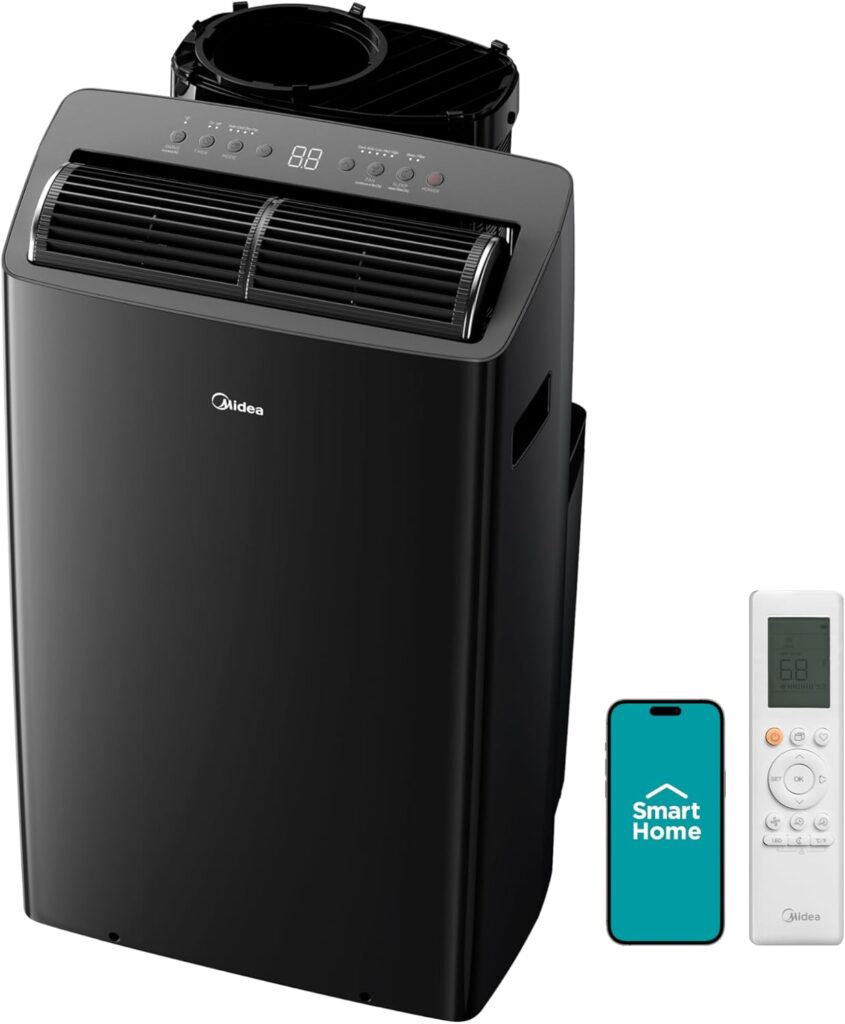
The Midea Duo Smart Inverter Portable AC is the best choice for most people comparing Midea Duo vs Whynter vs Black+Decker Portable AC.
It is not just because it cools well. It wins because it solves more of the problems people usually hate about portable air conditioners.
Midea lists the MAP14HS1TBL as a 12,000 BTU DOE portable AC with heat for spaces up to 550 square feet. It also includes cooling, heating, ventilation, and dehumidifying. The model uses variable-speed inverter technology, smart controls, and an ultra-quiet rating as low as 42 dBA. Midea also highlights its hose-in-hose design, which traps cool air and expels hot air.
That hose design matters. A standard single-hose portable AC exhausts hot air outside, but it can also pull cooled indoor air out of the room. That creates a pressure issue and can make the room harder to cool.
The Midea Duo’s hose-in-hose system is designed to reduce that problem. It is not identical to every traditional dual-hose design, but in practical terms, it gives you a more efficient cooling setup than a basic single-hose unit.
Where the Midea Duo wins
The Midea Duo wins on comfort.
It is the most bedroom-friendly pick here because it combines a lower noise floor, inverter cooling, app control, and strong cooling capacity. Instead of blasting on and off aggressively, an inverter unit can adjust output more smoothly. That can make a real difference when the unit is running while you sleep, work, or watch TV.
It is also the best fit for people who want one portable AC to handle multiple situations. Bedroom at night. Living room during the day. Apartment during a heat wave. Home office in the afternoon. It has enough power for serious cooling without feeling as clunky as many older portable ACs.
Where the Midea Duo falls short
The biggest downside is price.
Midea Duo units are often more expensive than basic Black+Decker models and sometimes more expensive than traditional workhorse units like the Whynter ARC-14S. It is also still a large portable AC, so do not expect it to disappear into a tiny bedroom corner.
It is better described as a premium portable AC than a budget unit.
Who should buy the Midea Duo?
Buy the Midea Duo if you want:
- The best overall portable AC in this comparison
- A strong bedroom or apartment unit
- Quieter operation
- Smart controls
- Better efficiency than a basic single-hose model
- Cooling plus heat
- A more refined overnight experience
Who should skip it?
Skip the Midea Duo if:
- You want the cheapest option
- You only need occasional guest-room cooling
- You do not care about smart controls
- You prefer a simpler, non-app appliance
- You need the toughest dehumidifying workhorse
Whynter ARC-14S: Best for Large Hot Rooms and Humid Spaces
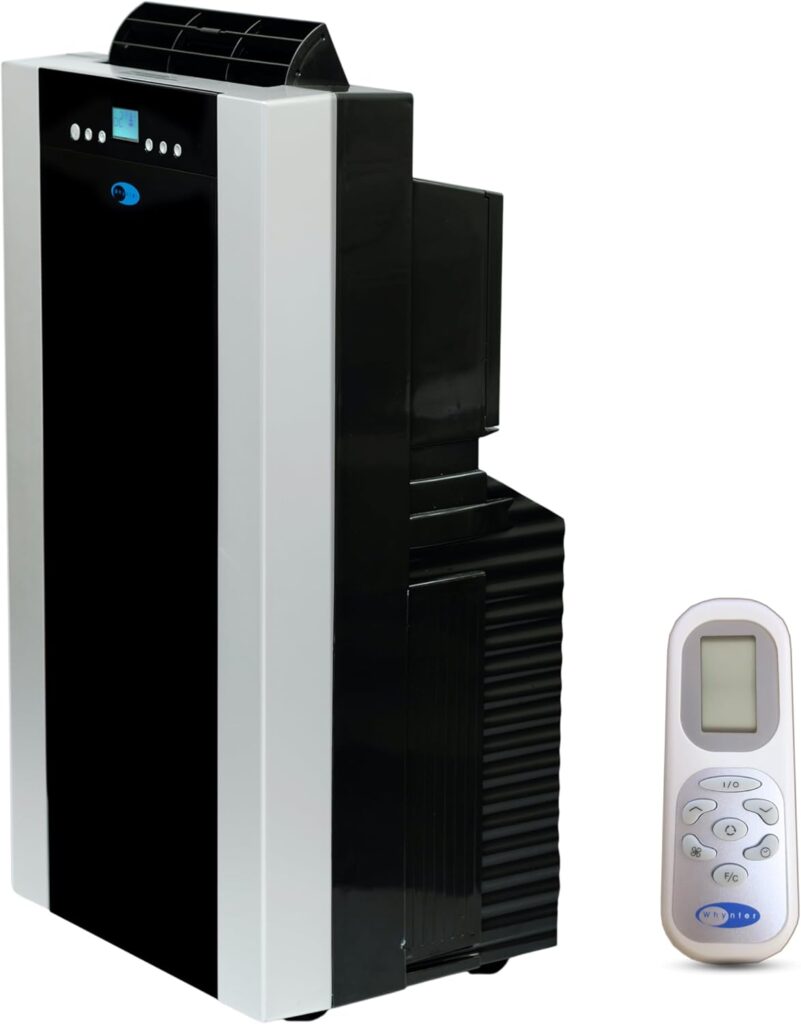
The Whynter ARC-14S is the workhorse of this comparison.
It is not the sleekest. It is not the most modern. It is not the quietest. But if your main goal is to cool a hot room and remove moisture, the Whynter still deserves serious attention.
Whynter lists the ARC-14S at 14,000 BTU ASHRAE / 9,500 BTU SACC, with coverage up to 500 square feet, dual-hose operation, 71 pints per day of dehumidifying capacity, three fan speeds, a carbon air filter, and a washable pre-filter. The listed noise level is under 51 dBA on low and under 56 dBA on high.
That makes it the practical pick for rooms that are hard to cool.
Where the Whynter wins
The Whynter ARC-14S wins on dual-hose cooling and humidity control.
A true dual-hose portable AC uses one hose to bring in outside air for the condenser side and another hose to exhaust hot air. This can help reduce the negative pressure problem that makes some single-hose portable ACs struggle.
That is why the Whynter makes sense for:
- Large bedrooms
- Studio apartments
- Hot upstairs rooms
- Humid rooms
- Home offices with electronics
- Rooms that central AC does not reach well
- Spaces where cooling power matters more than design
It also has a stronger “utility appliance” feel. The carbon filter, washable pre-filter, auto drain function, and high dehumidifying capacity make it more appealing for people dealing with sticky, uncomfortable air.
Where the Whynter falls short
The Whynter ARC-14S feels more practical than premium.
It is large. It is heavy. It has a more traditional portable AC look. It does not have the same smart-home feel as the Midea Duo. And while its listed noise numbers are respectable, it is not the unit I would choose first for a light sleeper with the AC placed close to the bed.
It is a better cooling tool than a comfort-tech product.
Who should buy the Whynter ARC-14S?
Buy the Whynter if you want:
- Strong dual-hose cooling
- A proven large-room portable AC
- Better humidity control
- A no-nonsense workhorse
- Cooling for a hot room, studio, or large bedroom
- A washable pre-filter plus carbon filter
- More cooling confidence than a basic single-hose model
Who should skip it?
Skip the Whynter if:
- You are a light sleeper
- You want app controls
- You want the most attractive unit
- Your room is small
- You need heat mode
- You want the easiest unit to move frequently
Black+Decker Portable AC: Best Simple Value Pick
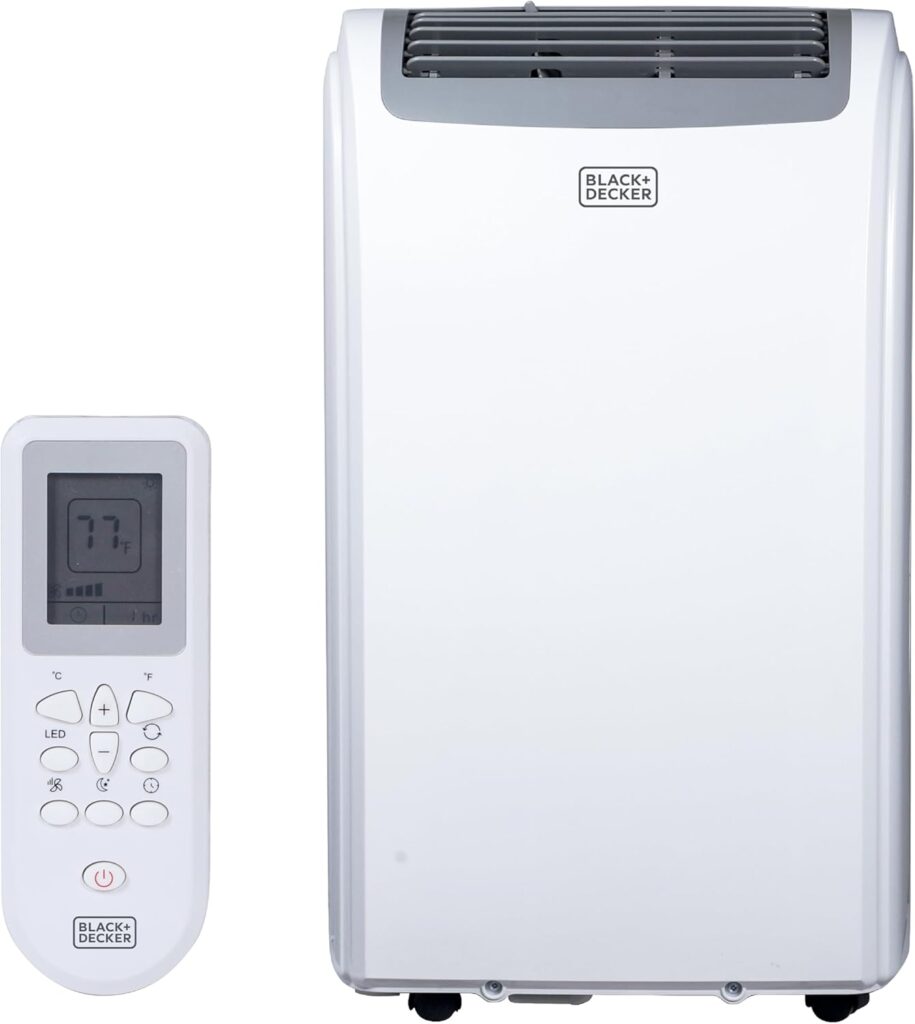
The Black+Decker BPP10WTB is the practical value pick in this comparison.
It is not as refined as the Midea Duo and not as cooling-focused as the Whynter ARC-14S, but it may be the easiest choice for a lot of shoppers who simply want a familiar portable AC from a recognizable brand.
Black+Decker lists the BPP10WTB as a 10,000 BTU SACC/CEC / 14,000 BTU ASHRAE portable air conditioner made for rooms up to 450 square feet. It has cooling, fan, and dehumidifying modes, a remote, a 24-hour timer, auto air swing, a washable filter, and dehumidifying up to 90 pints every 24 hours.
That makes it more competitive than some older or smaller Black+Decker portable ACs.
Where Black+Decker wins
Black+Decker wins on simplicity and accessibility.
This is the kind of portable AC many buyers understand right away. Roll it in. Connect the hose. Use the remote. Set the timer. Clean the filter. That simplicity has value, especially for guest rooms, rentals, dorm-style spaces, and people who do not want another app-controlled appliance.
It is also lighter than the Midea Duo and Whynter ARC-14S, based on listed weights. That does not make it lightweight, but it can make it easier to move around the home.
Where Black+Decker falls short
The main weakness is the single-hose design.
A strong single-hose portable AC can still cool a room, but it usually gives up efficiency compared with a good dual-hose or hose-in-hose design. If the room is large, sunny, humid, or poorly insulated, the Black+Decker may have to work harder to keep up.
It also has a higher listed noise level than the quietest Midea Duo number. Black+Decker lists the BPP10WTB at 58 dBA on the highest setting. That may be acceptable in a living room, but light sleepers may notice it in a bedroom.
Who should buy the Black+Decker portable AC?
Buy the Black+Decker if you want:
- A straightforward portable AC
- A recognizable brand
- Good cooling for a medium room
- Simple remote control operation
- Fan and dehumidifier modes
- A washable filter
- Less complexity than a premium smart model
Who should skip it?
Skip the Black+Decker if:
- You want the quietest bedroom AC
- You want the most efficient hose design
- Your room gets intense afternoon sun
- You need smart controls
- You want the best large-room performance
- You are cooling a very humid or difficult room
Design and Setup: Which One Is Easiest to Live With?
Midea Duo
The Midea Duo is the most polished of the three. The hose-in-hose setup is cleaner than a traditional dual-hose design, and the smart controls make it easier to adjust from bed or across the room.
The tradeoff is size. It is still a large appliance, and at about 77 pounds, it is not something you want to carry upstairs often.
Whynter ARC-14S
The Whynter ARC-14S has a more traditional dual-hose setup. That means more hose bulk at the window, but also better cooling logic for hot rooms.
It is not hard to use, but it is more utilitarian. It looks and feels like a serious portable AC, not a lifestyle appliance.
Black+Decker BPP10WTB
The Black+Decker is the most familiar setup for many shoppers. It uses a standard portable AC format with a window kit, exhaust hose, remote, washable filter, and rolling wheels.
It is the easiest to understand at a glance, but the single-hose design is also its biggest performance limitation.
Design and setup winner: Midea Duo
Easiest traditional setup: Black+Decker
Best functional cooling setup: Whynter
Cooling Performance: Which One Actually Cools Better?
This depends on the room.
The Midea Duo has the strongest balance for most homes because of its 12,000 BTU DOE rating, inverter technology, and hose-in-hose design. It is the best pick when you want strong cooling but also care about comfort and noise.
The Whynter ARC-14S is the most dependable “hot room” choice because of its true dual-hose system and long-standing reputation as a powerful portable AC. It has a lower SACC rating than the Midea Duo, but its dual-hose layout and dehumidifying strength make it very practical in difficult rooms.
The Black+Decker BPP10WTB is capable, but its single-hose design makes it the least ideal for rooms with heavy heat gain. It can be a good fit for a medium room, but I would not pick it first for an attic bedroom, sunroom, or large open apartment.
Cooling winner for most people: Midea Duo
Cooling winner for tough hot rooms: Whynter ARC-14S
Cooling winner for simple medium-room use: Black+Decker
Noise and Bedroom Comfort: Which One Is Best for Sleep?
The Midea Duo is the clear bedroom winner.
Midea lists ultra-quiet operation as low as 42 dBA, which is excellent for a portable AC. The inverter compressor also helps because it can adjust output instead of cycling as harshly as some traditional models.
The Whynter ARC-14S is not terribly loud for its class, but it is still a more powerful workhorse-style unit. Its listed noise level is under 51 dBA on low and under 56 dBA on high. That is reasonable, but not as sleep-first as Midea.
The Black+Decker BPP10WTB is usable in a bedroom if you are not sensitive to sound, but the listed high-setting noise of 58 dBA makes it the least attractive choice for light sleepers.
Bedroom comfort winner: Midea Duo
Acceptable for heavier sleepers: Whynter
Best for guest rooms or daytime use: Black+Decker
Humidity Control: Which One Handles Muggy Rooms Best?
This is where the comparison gets interesting.
The Whynter ARC-14S lists 71 pints per day of dehumidifying capacity, which is strong and very useful for humid rooms.
The Black+Decker BPP10WTB lists dehumidifying up to 90 pints every 24 hours, which is impressive on paper.
The Midea Duo includes dehumidifying as part of its 4-in-1 comfort design, but its biggest advantage is not raw dehumidifier-style capacity. Its advantage is the balance of cooling, quieter operation, heating, smart control, and efficiency.
For a damp basement-like room or a humid studio, I would lean Whynter. For a normal bedroom that just gets warm and slightly sticky, I would lean Midea.
Best for humid hot rooms: Whynter ARC-14S
Best listed dehumidifying number: Black+Decker BPP10WTB
Best balanced comfort: Midea Duo
Smart Features and Controls
The Midea Duo is the smart-home winner. It supports app control, Apple Watch control, and voice assistant control, according to Midea’s product listing.
The Black+Decker BPP10WTB keeps things simpler with a remote, timer, and top-mounted LED controls. That may be better for users who do not want another connected appliance.
The Whynter ARC-14S is also straightforward. You get digital controls, remote control, a programmable timer, and core cooling functions, but not the same app-based experience as Midea.
Smart control winner: Midea Duo
Simple control winner: Black+Decker
No-nonsense control winner: Whynter
Major Differences Between Midea Duo, Whynter, and Black+Decker
1. Midea Duo is the most refined
The Midea Duo is the portable AC I would recommend to someone who wants the best all-around experience.
It cools well, runs quieter, has smart controls, and uses a more efficient hose-in-hose design. It is the easiest one to position as a “main bedroom AC” or “primary apartment AC.”
2. Whynter is the most workhorse-like
The Whynter ARC-14S is the practical power pick.
It is better for people who care less about sleek design and more about cooling a tough space. If your room is hot, humid, and hard to cool, Whynter makes sense.
3. Black+Decker is the simplest
The Black+Decker BPP10WTB is the familiar, straightforward option.
It is not the most advanced unit here, but it is easy to understand and broadly appealing. It is the kind of portable AC that works best when expectations are realistic and the room is not extreme.
4. Hose design matters more than most people think
This is the biggest hidden difference.
Midea’s hose-in-hose design and Whynter’s dual-hose design are better suited for serious cooling than a basic single-hose layout. Black+Decker can still work, but in tougher rooms, the single-hose design is a real disadvantage.
5. The best choice depends on room difficulty
A normal bedroom is different from a top-floor apartment. A shaded guest room is different from a sunny studio. A humid room is different from a dry room.
That is why the winner changes depending on your actual space.
Which Portable AC Should You Buy?
Buyer Type | Best Choice | Why |
|---|---|---|
Most people | Midea Duo | Best mix of cooling, quietness, efficiency, and controls |
Light sleepers | Midea Duo | Lowest listed noise and smoother inverter operation |
Large hot room | Whynter ARC-14S | True dual-hose cooling and strong room coverage |
Humid room | Whynter ARC-14S | Strong dehumidifying and workhorse design |
Simple medium room | Black+Decker BPP10WTB | Easy controls, good SACC rating, familiar setup |
Budget-conscious buyer | Black+Decker BPP10WTB | Often easier to find and simpler to use |
Smart-home user | Midea Duo | App, voice, and connected controls |
Garage, studio, or tough space | Whynter ARC-14S | Better heavy-duty cooling profile |
Guest room | Black+Decker BPP10WTB | Simple enough for occasional use |
Primary bedroom | Midea Duo | Better comfort for long overnight use |
Pros and Cons
Midea Duo Pros
- Best overall balance
- Strong 12,000 BTU DOE cooling class
- Up to 550-square-foot coverage
- Hose-in-hose design
- Quiet operation as low as 42 dBA
- Smart app and voice control
- Inverter technology
- Includes heating on MAP14HS1TBL
- Good fit for bedrooms and apartments
Midea Duo Cons
- Usually more expensive
- Still large and heavy
- May be more appliance than a small room needs
- Smart features may be unnecessary for some users
Whynter ARC-14S Pros
- True dual-hose design
- Strong workhorse cooling
- Good for hot and humid rooms
- 9,500 BTU SACC rating
- Up to 500-square-foot coverage
- 71-pint-per-day dehumidifying
- Carbon filter and washable pre-filter
- Strong choice for studios and large bedrooms
Whynter ARC-14S Cons
- Bulky design
- No heat mode on ARC-14S
- No app control on the base model
- Not the most refined bedroom pick
- Heavy and more utilitarian
Black+Decker BPP10WTB Pros
- Simple and familiar
- 10,000 BTU SACC/CEC rating
- Up to 450-square-foot room coverage
- Remote control and 24-hour timer
- Washable filter
- Fan and dehumidifier modes
- Strong listed dehumidifying capacity
- Usually easier for casual buyers to understand
Black+Decker BPP10WTB Cons
- Single-hose design
- Not the quietest option
- Less efficient cooling setup than Midea or Whynter
- Not ideal for very hot or sunny rooms
- Less premium overall feel
Final Verdict: Midea Duo vs Whynter vs Black+Decker Portable AC
The Midea Duo is the best portable AC for most people because it gives you the strongest all-around mix of cooling power, quietness, smart control, inverter efficiency, and bedroom comfort.
The Whynter ARC-14S is the better choice if you need a serious cooling workhorse for a large, hot, or humid room. It is not as sleek, but it is practical and powerful.
The Black+Decker BPP10WTB is the best choice if you want a simpler portable AC with solid specs, familiar controls, and less of a premium feel. It is not the best performer in this comparison, but it can make sense for medium rooms and straightforward cooling needs.
My recommendation is simple:
Buy the Midea Duo if you want the best overall portable AC. Buy the Whynter if your room is difficult to cool. Buy the Black+Decker if you want simple, familiar, medium-room cooling without paying for the most advanced design.
That is the clearest answer in the Midea Duo vs Whynter vs Black+Decker Portable AC debate.
FAQs
Is Midea Duo better than Whynter?
The Midea Duo is better for most bedrooms, apartments, and everyday home comfort because it is quieter, smarter, and more refined. The Whynter ARC-14S is better for large, hot, humid rooms where dual-hose cooling and dehumidifying matter more than smart controls or quiet sleep comfort.
Is Whynter better than Black+Decker?
The Whynter ARC-14S is usually better than Black+Decker for tougher cooling situations because it uses a dual-hose design and has a workhorse cooling profile. Black+Decker is better if you want a simpler, more familiar portable AC for a medium room that is not extremely hot.
Is Midea Duo worth the extra money?
The Midea Duo is worth the extra money if you plan to use your portable AC often, especially in a bedroom, apartment, or home office. The quieter inverter operation, smart controls, and hose-in-hose design make it feel more comfortable and efficient than many basic portable ACs.
Which portable AC is best for a bedroom?
The Midea Duo is the best bedroom pick in this comparison because it has quieter operation, inverter cooling, smart controls, and strong cooling capacity. The Whynter can work in a bedroom, but it is better for larger or hotter spaces. Black+Decker is better for guest rooms or simpler cooling needs.
Which portable AC is best for a large room?
The Whynter ARC-14S is the best large-room workhorse in this comparison because it has true dual-hose operation, 500-square-foot listed coverage, and strong dehumidifying capacity. The Midea Duo is also excellent for larger rooms if quiet operation and smart features matter more.
Does hose design matter on a portable air conditioner?
Yes, hose design matters a lot. Single-hose portable ACs can pull conditioned indoor air out of the room while exhausting hot air. Dual-hose and hose-in-hose designs are usually better for larger, hotter, or more difficult rooms because they reduce that pressure problem.
Is Black+Decker portable AC good?
A Black+Decker portable AC can be a good choice for simple medium-room cooling, especially if you want familiar controls and do not need a premium smart unit. It is not the strongest choice for very hot, humid, or large spaces compared with Midea Duo or Whynter.
What is the difference between ASHRAE BTU and SACC BTU?
ASHRAE BTU is the older, larger cooling number often shown in product names. SACC or DOE-style ratings are usually more realistic for portable air conditioners because they better reflect real-world performance. When comparing portable ACs, the SACC number is usually the better number to trust.
Other Interesting Articles
- Best Air Purifier for Home: Top 5 Picks That Actually Make a Difference
- PuroAir 240 vs Shark Air Purifier: Which One Should You Buy?
- PuroAir 240 vs Sans Air Purifier: Which One Should You Buy?
- PuroAir 240 vs Levoit 300: Which Air Purifier Is the Better Buy?
- PuroAir 240 vs PuroAir 400: Which One Actually Fits Your Home?
Author Box
HappyHomeNerd helps readers choose better home comfort products without overbuying. Our guides focus on what actually matters in real homes: room size, noise, setup, energy use, filters, humidity, cleaning, smart features, and everyday comfort.
Final verdict: Midea Duo is best for most people, Whynter is best for hard-to-cool rooms, and Black+Decker is best for simple medium-room cooling in the Midea Duo vs Whynter vs Black+Decker Portable AC comparison.