I'm a participant in the Amazon Services LLC Associates Program, an affiliate advertising program designed to provide a means for me to earn fees by linking to Amazon.com and affiliated sites.
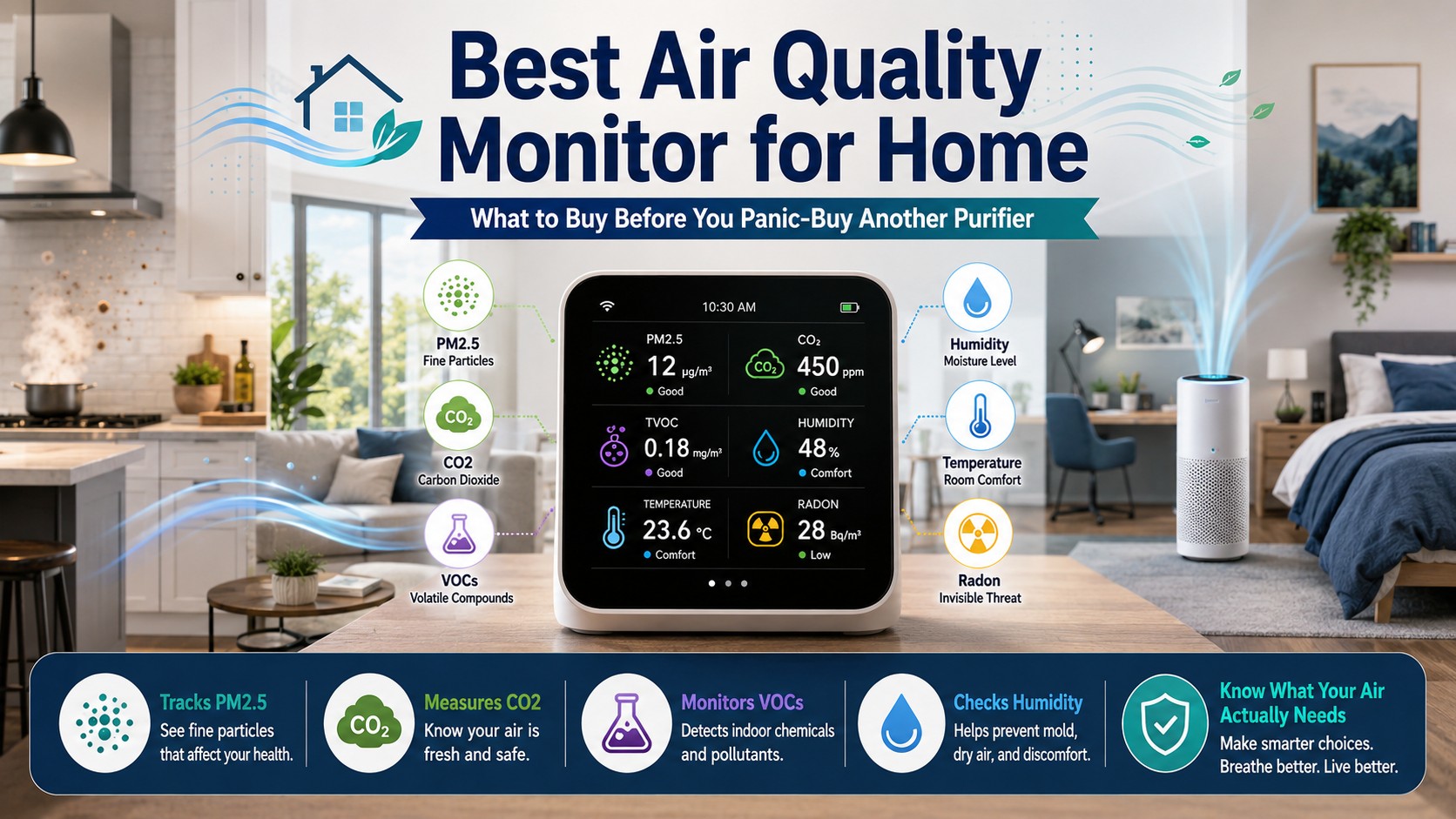
The best air quality monitor for home use is the Airthings View Plus for most people who want the broadest picture of indoor air quality because it tracks radon, PM2.5, CO2, VOCs, humidity, temperature, and air pressure in one device. That combination matters because indoor air problems are rarely one thing. A home can have clean-looking air but high CO2, normal humidity but high PM2.5 from cooking, or a basement that looks fine but has elevated radon. Airthings lists the View Plus sensors as radon, PM2.5, CO2, temperature, humidity, VOCs, and air pressure, with Wi-Fi and app-based trend tracking.
That said, not everyone needs the most comprehensive monitor.
If you mainly care about PM2.5 and CO2, the IQAir AirVisual Pro and Aranet 4 are stronger data-focused choices. If you want a simpler smart-home monitor, the Awair Element is easier to understand. If you want a budget-friendly Alexa option, the Amazon Smart Air Quality Monitor is useful, but it does not measure CO2 or radon.
Best Air Quality Monitors for Home: Quick Picks
Pick | Best For | What It Measures | Main Strength | Main Drawback | Price | |
|---|---|---|---|---|---|---|
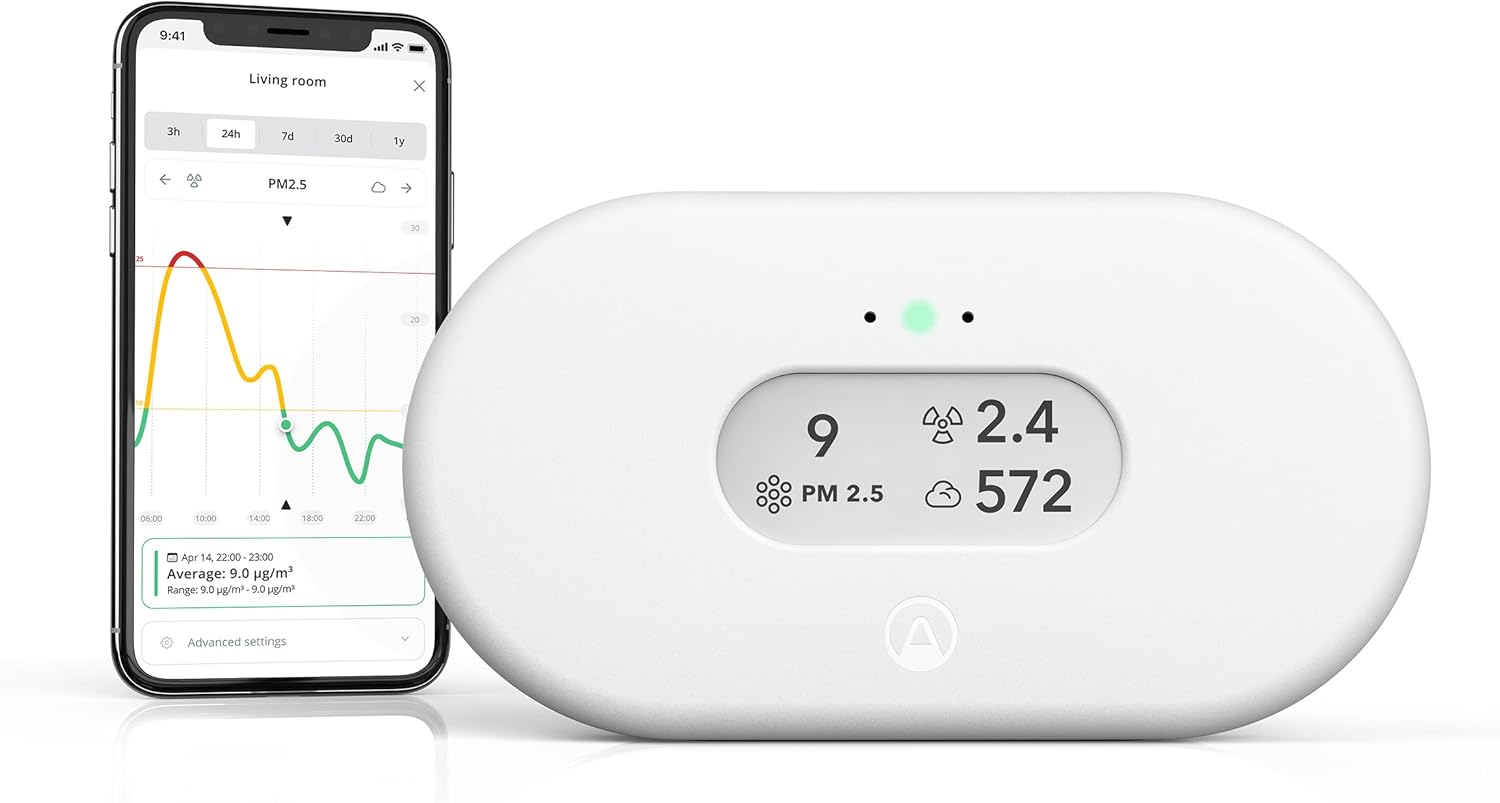 | Best overall | Radon, PM2.5, CO2, VOC, humidity, temperature, pressure | Most complete home picture | More expensive |  | |
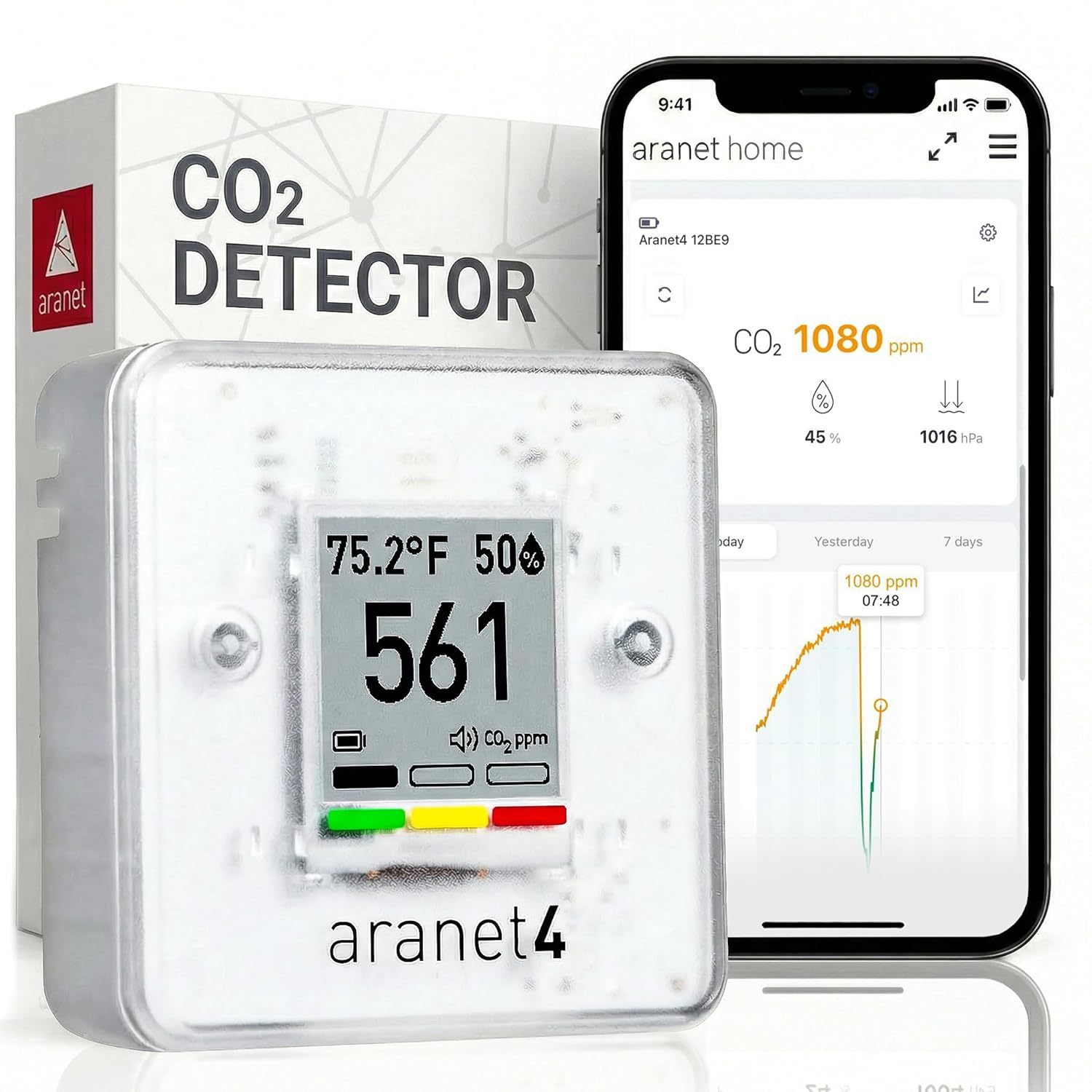 | Best for data nerds and Home Assistant | PM2.5, CO2, TVOC, NOx, temperature, humidity | Open-source, detailed readings | Less mainstream | | |
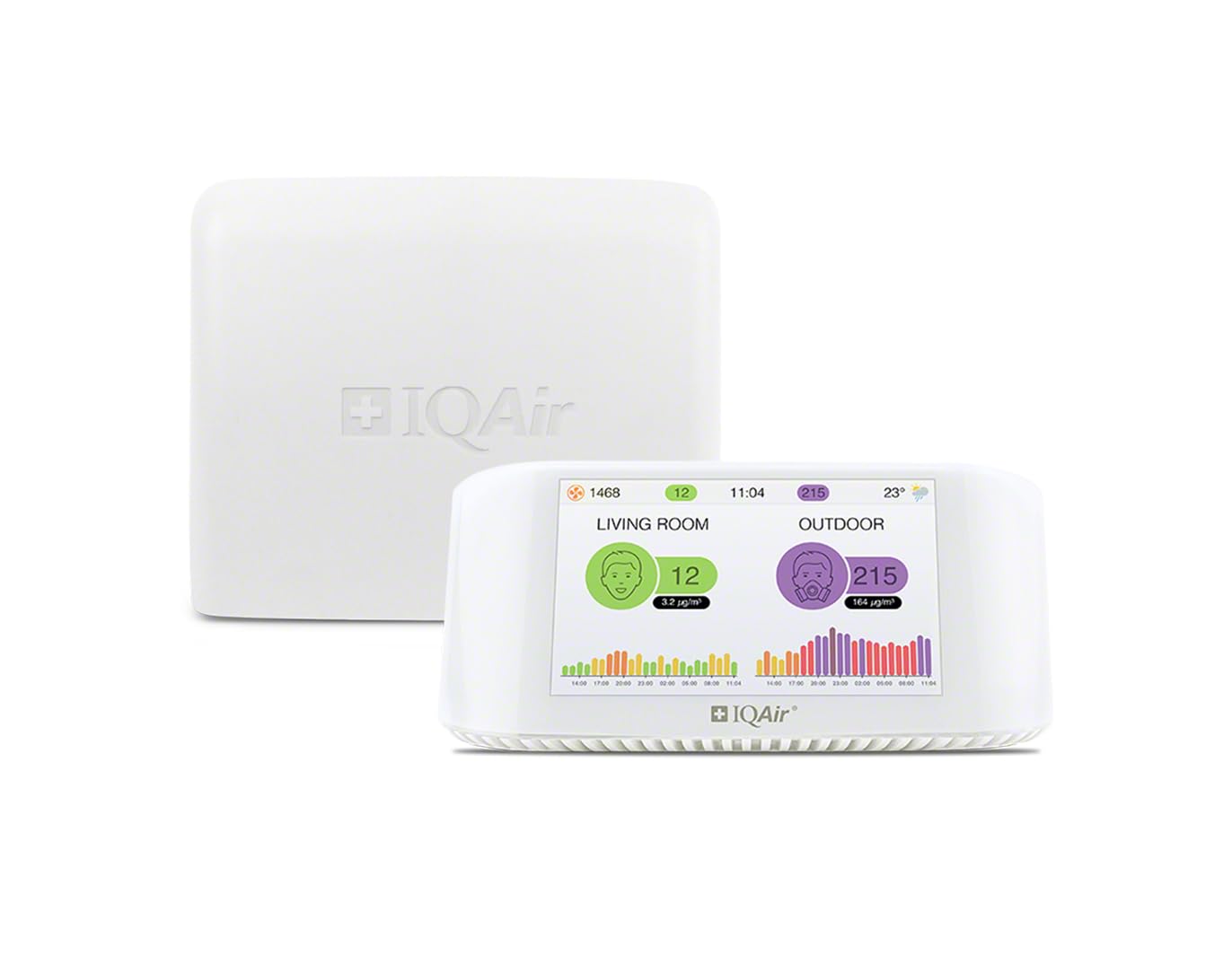 | Best display for PM2.5 and CO2 | PM2.5, CO2, temperature, humidity, AQI | Excellent screen and trend view | No VOC or radon | | |
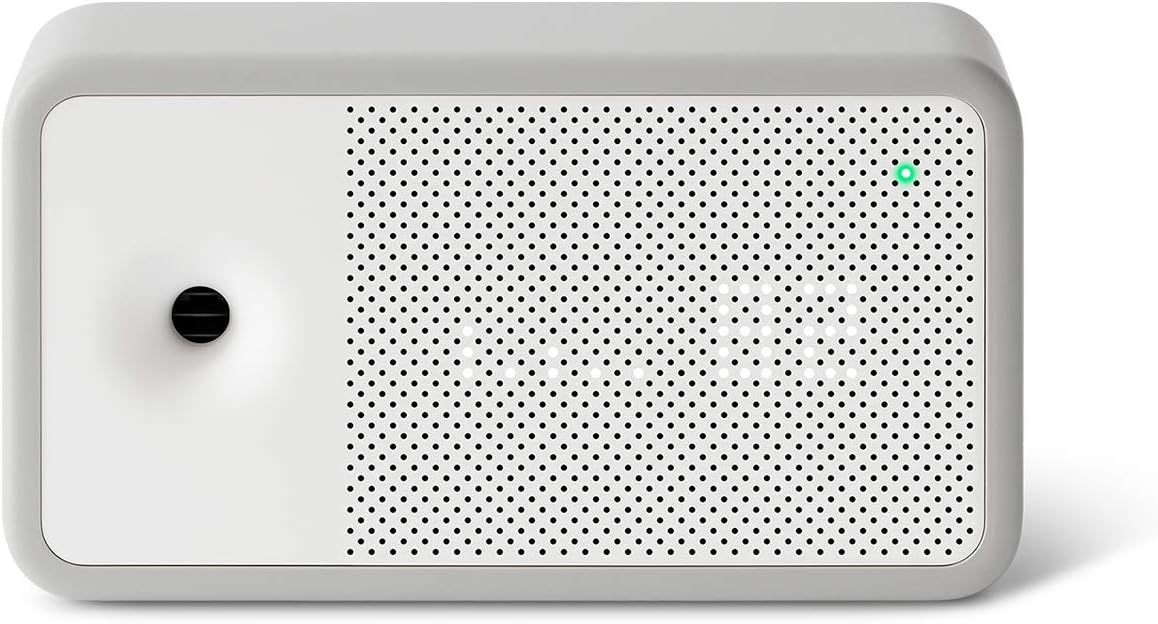 | Best simple all-around dashboard | PM2.5, CO2, VOC, temperature, humidity | Easy score-based view | Less detailed than Aranet | | |
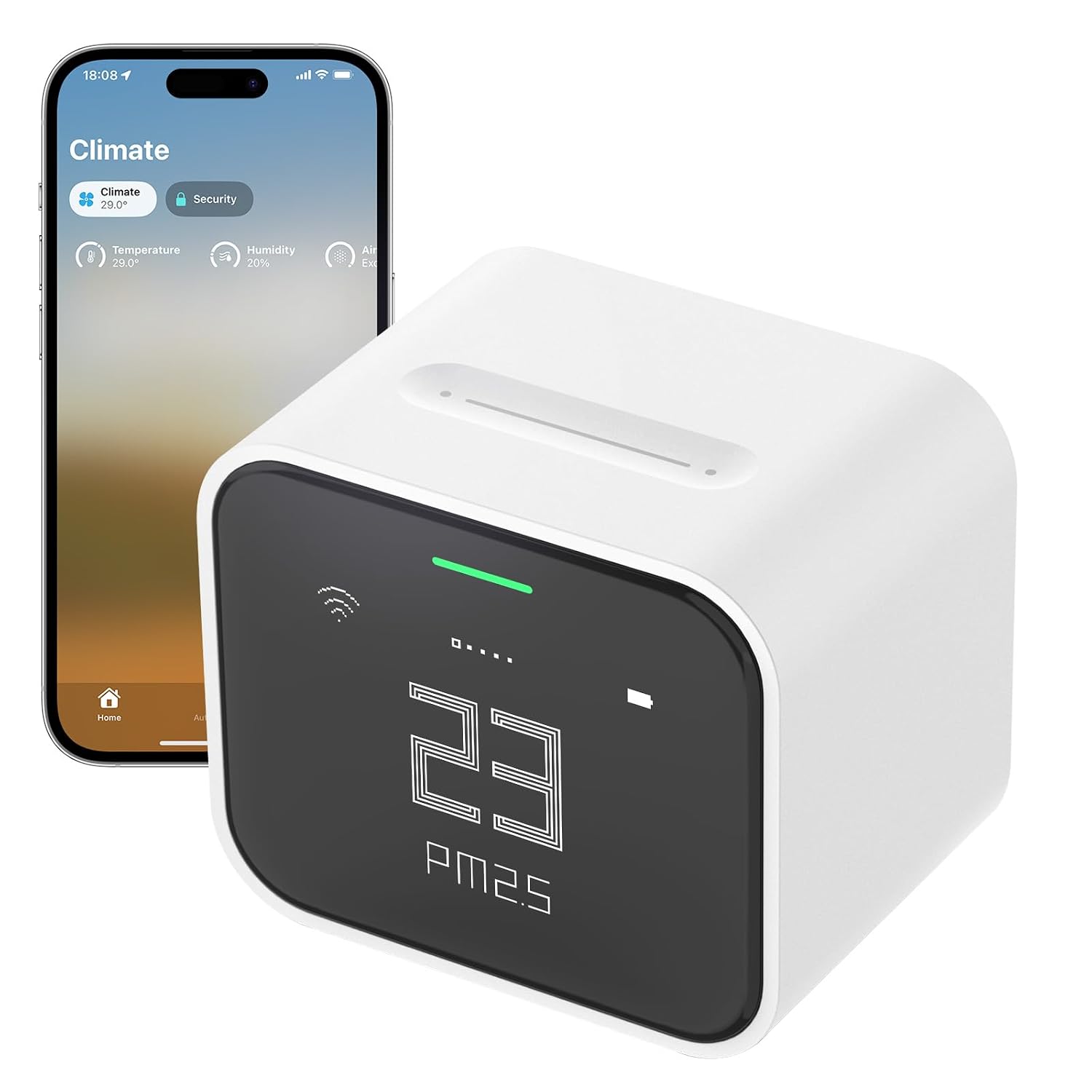 | Best compact CO2 and PM monitor | PM2.5, PM10, CO2, temperature, humidity | Small, useful display | Limited ecosystem | | |
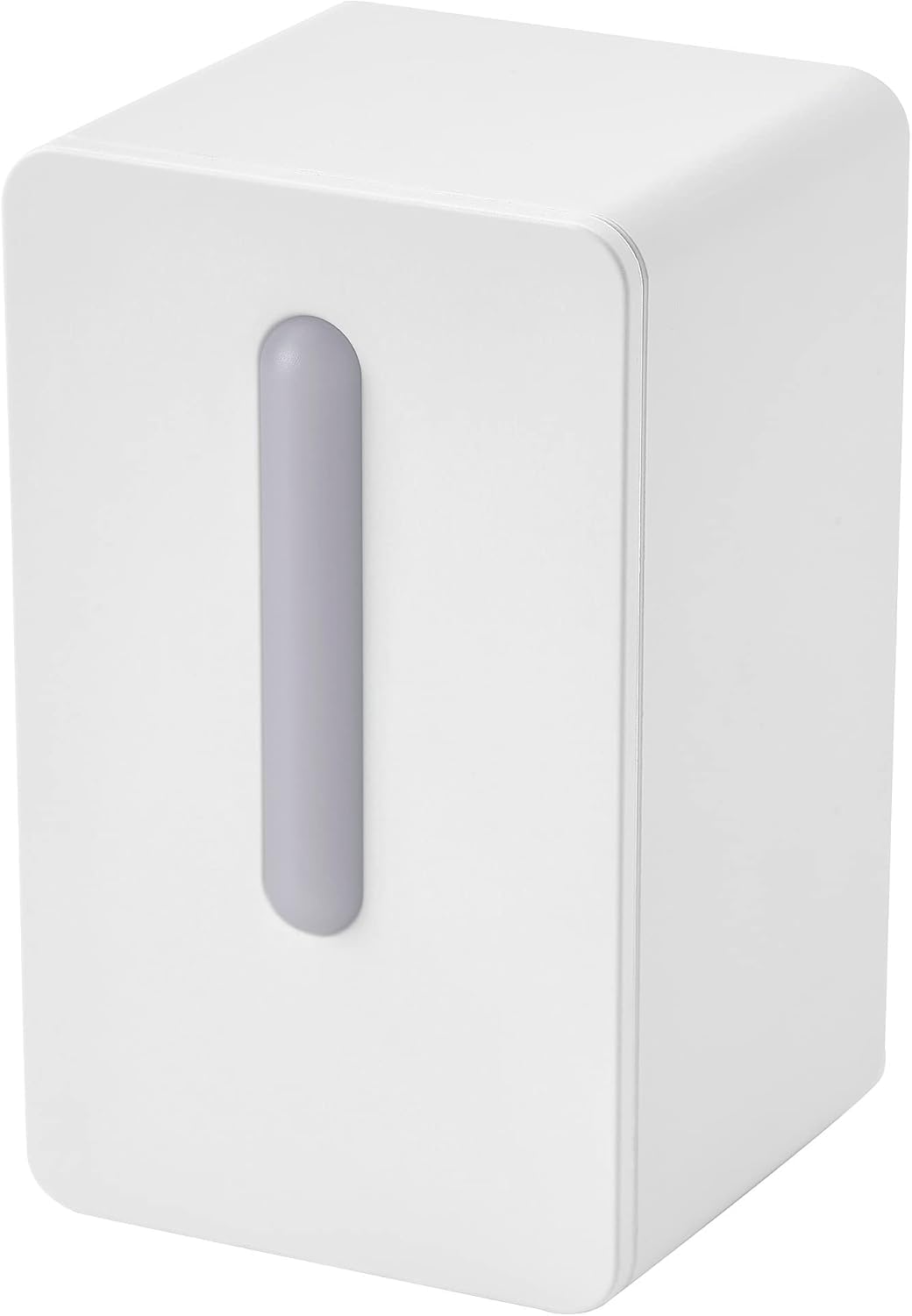 | Best budget smart-home sensor | PM2.5, TVOC, humidity, temperature | Affordable, IKEA smart-home friendly | No CO2 | | |
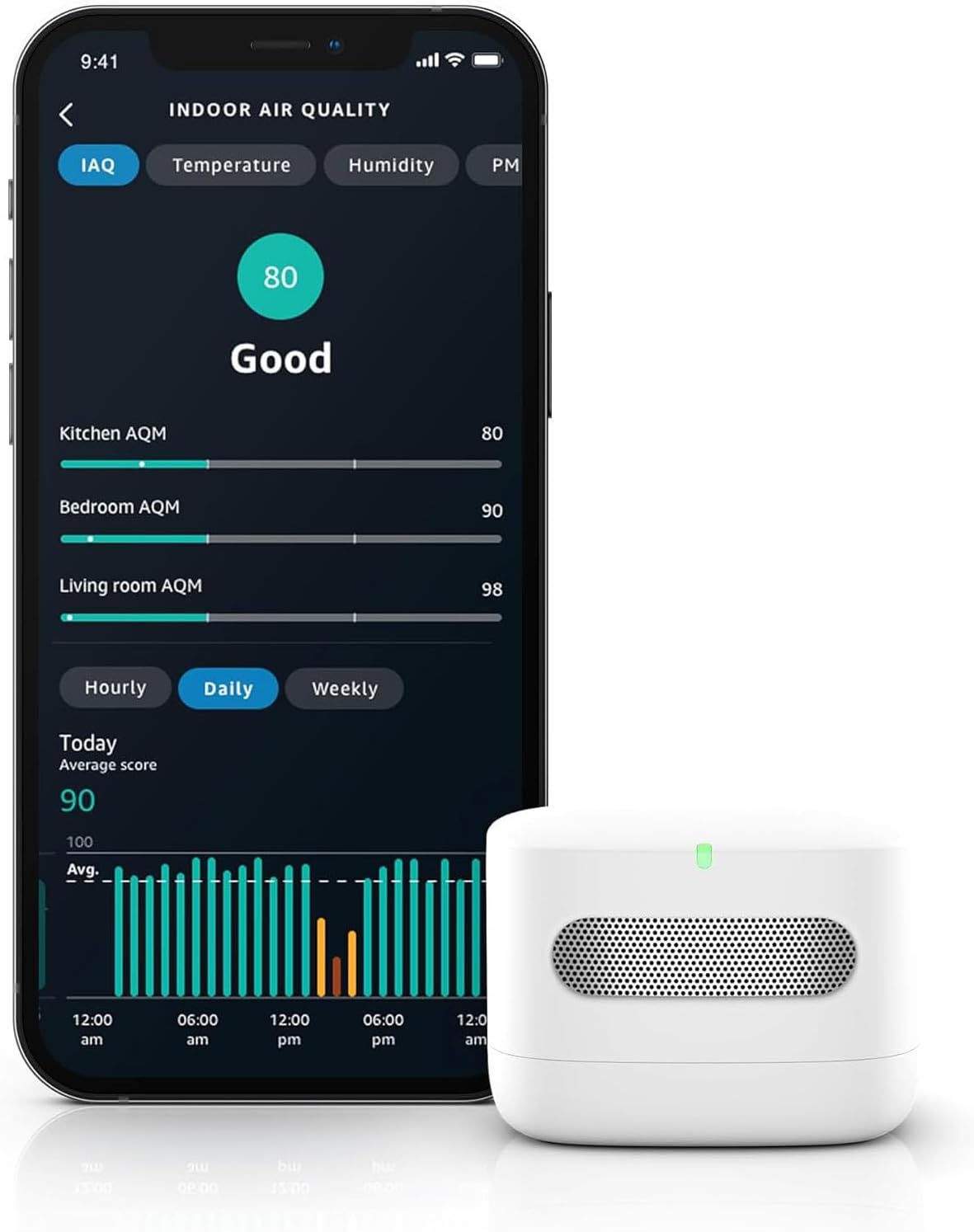 | Best Alexa budget pick | PM2.5, VOC, CO, humidity, temperature | Alexa integration, simple alerts | No CO2 or radon | | |
 | Best Apple HomeKit VOC monitor | VOC, temperature, humidity | Great for Apple homes | Not a full air quality monitor | |
Why an Air Quality Monitor Is Worth Buying
Most people buy an air purifier first and ask questions later.
That is backwards.
An air quality monitor helps you figure out what problem you actually have. Maybe your air purifier is not running when PM2.5 spikes from cooking. Maybe your bedroom CO2 rises overnight because the room is closed up. Maybe your humidity is too high and you need a dehumidifier, not another filter. Maybe your basement needs radon testing.
The EPA says indoor air quality can be improved through source control, ventilation, and filtration, and it notes that indoor air quality affects everyone, especially children, older adults, and people with asthma or heart and lung conditions.
A good monitor helps answer practical questions:
- Should I open a window or keep it closed?
- Is cooking making the air worse?
- Is wildfire smoke getting inside?
- Is my air purifier actually lowering PM2.5?
- Is the bedroom getting stuffy at night?
- Is the bathroom humidity too high?
- Do I need a dehumidifier?
- Do I need a dedicated radon test?
- Do I need a dedicated carbon monoxide alarm?
That last point is important. An air quality monitor is not a replacement for safety devices. The EPA recommends certified carbon monoxide alarms near sleeping areas, and Consumer Reports notes that even if an indoor air quality monitor reports CO, a dedicated CO detector is still the safer choice.
What Should a Home Air Quality Monitor Measure?
The best home air quality monitor depends on what you care about. For most homes, these are the most useful readings.
Reading | What It Tells You | Why It Matters | Best Action |
|---|---|---|---|
PM2.5 | Fine particles from smoke, cooking, dust, candles, outdoor pollution | Helps decide when to run an air purifier | Use purifier, range hood, ventilation, source control |
CO2 | Ventilation and stuffiness | High CO2 often means not enough fresh air | Open door/window if outdoor air is safe, improve ventilation |
VOC / TVOC | Chemical off-gassing and odors | Can spike from cleaning, paint, furniture, candles, products | Remove source, ventilate, use carbon filtration |
Humidity | Moisture level | High humidity can support mold and dust mites | Use dehumidifier, bathroom fan, AC |
Temperature | Comfort and HVAC performance | Affects sleep, comfort, and humidity | Adjust HVAC, shade, airflow |
Radon | Radioactive gas risk | Important for basements and lower levels | Test/monitor and mitigate if elevated |
CO | Carbon monoxide risk | Potentially deadly gas | Use dedicated certified CO alarms |
For PM2.5 specifically, the EPA says indoor particles can come from outdoor air, cooking, cleaning, combustion, candles, fireplaces, pests, plants, mold, printers, and indoor chemical reactions.
1. Best Overall: Airthings View Plus
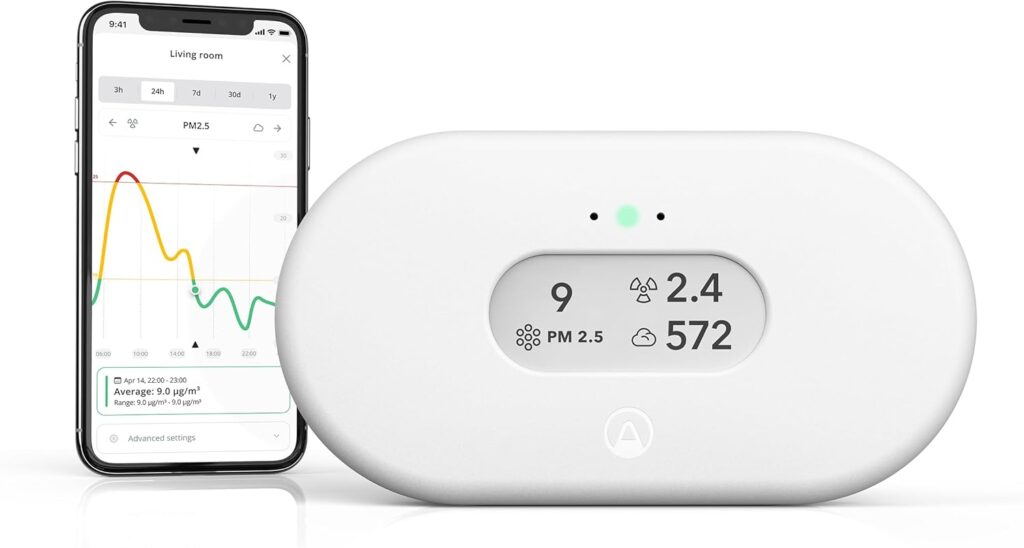
The Airthings View Plus is the best air quality monitor for most homes because it gives you the widest indoor air picture in one device.
It measures:
- Radon
- PM2.5
- CO2
- VOCs
- Humidity
- Temperature
- Air pressure
That makes it especially useful for people who want one monitor for a family room, bedroom, basement, nursery, or home office. Airthings describes the View Plus as its comprehensive radon and air quality monitor, with seven sensors and Wi-Fi connectivity.
Why it works well at home
The View Plus is valuable because it connects multiple indoor air problems.
A cheaper monitor may show PM2.5 but miss CO2. Another may show VOCs but miss radon. Another may show humidity but not fine particles. The View Plus brings those readings together.
That matters because the right fix depends on the reading:
- High PM2.5? Run an air purifier.
- High CO2? Improve ventilation.
- High humidity? Use a dehumidifier.
- High VOCs? Remove the source and ventilate.
- High radon? Test seriously and consider mitigation.
Radon is the biggest reason this model stands apart. The EPA says radon is the number one cause of lung cancer among non-smokers and the second leading cause overall, responsible for about 21,000 lung cancer deaths every year.
Who should buy it
Buy the Airthings View Plus if you want:
- The most complete home air quality monitor
- Radon monitoring
- PM2.5 and CO2 in the same device
- App-based history
- A family-room, basement, or bedroom monitor
- Long-term trends instead of one-time readings
- A simple screen plus deeper app data
Who should skip it
Skip it if you only care about PM2.5 and CO2, or if you want a cheaper monitor for one room. In that case, Aranet, IQAir, Qingping, or IKEA may make more sense.
2. Best for Data Nerds: Aranet 4
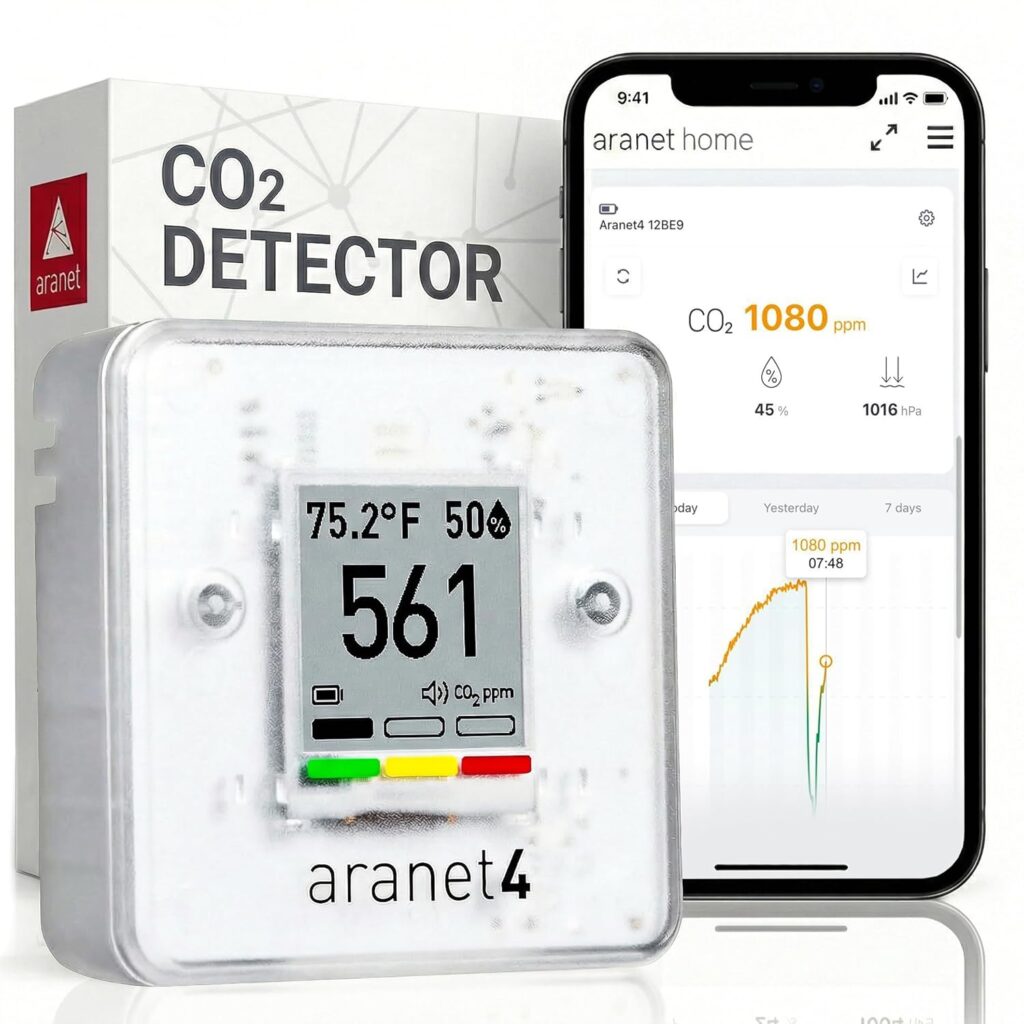
The Aranet 4 is the best air quality monitor for people who want transparency, data, and smart-home flexibility.
Aranet says it measures PM2.5, CO2, TVOCs, NOx, temperature, and humidity, and has a small display plus color LED bar. It is also open-source and customizable, with native Home Assistant and Homey support.
Why it works well at home
This is the pick for people who want to understand patterns.
It is especially useful if you want to see what happens when:
- You cook
- You open a window
- You run an air purifier
- You use a gas stove
- You clean with sprays
- You sleep with the bedroom door closed
- Outdoor smoke moves indoors
The Aranet 4 is also appealing because it includes CO2, PM2.5, TVOCs, and NOx. Many cheaper monitors leave out one or more of those.
Who should buy it
Buy the Aranet 4 if you want:
- Open-source design
- Strong Home Assistant support
- PM2.5 and CO2 tracking
- TVOC and NOx readings
- A monitor for experiments and automations
- More control over your data
Who should skip it
Skip it if you want the most polished mainstream consumer app or radon monitoring. Airthings is better for radon, and Awair is simpler for casual users.
3. Best Display: IQAir AirVisual Pro
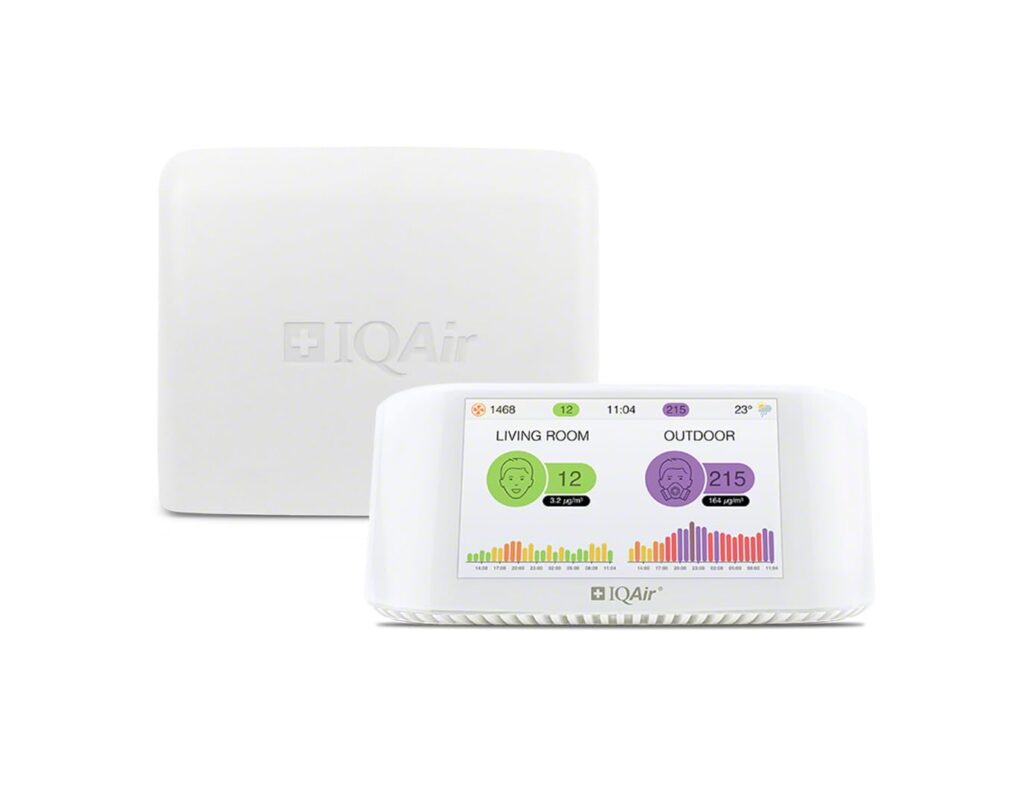
The IQAir AirVisual Pro is the best choice if you want a monitor with an excellent screen and easy-to-read indoor/outdoor air context.
IQAir says the AirVisual Pro monitors AQI, PM2.5, CO2, temperature, and relative humidity. The device also has a large 5-inch color display showing real-time and recent indoor air quality trends.
Why it works well at home
This is a great choice for people who want air quality information visible without opening an app.
That makes it useful in:
- Living rooms
- Classrooms
- Offices
- Bedrooms
- Shared family spaces
- Homes affected by wildfire smoke
The AirVisual Pro is especially strong if your main concerns are particles and ventilation. PM2.5 tells you when to run filtration. CO2 tells you when the room needs fresher air.
Who should buy it
Buy the IQAir AirVisual Pro if you want:
- A large, readable screen
- PM2.5 and CO2 tracking
- Indoor and outdoor air comparisons
- A monitor for smoke, cooking, and ventilation
- A device that does not depend entirely on a phone app
Who should skip it
Skip it if you want VOC or radon tracking. The AirVisual Pro is excellent for PM2.5 and CO2, but it is not the most complete all-in-one monitor.
4. Best Simple Dashboard: Awair Element
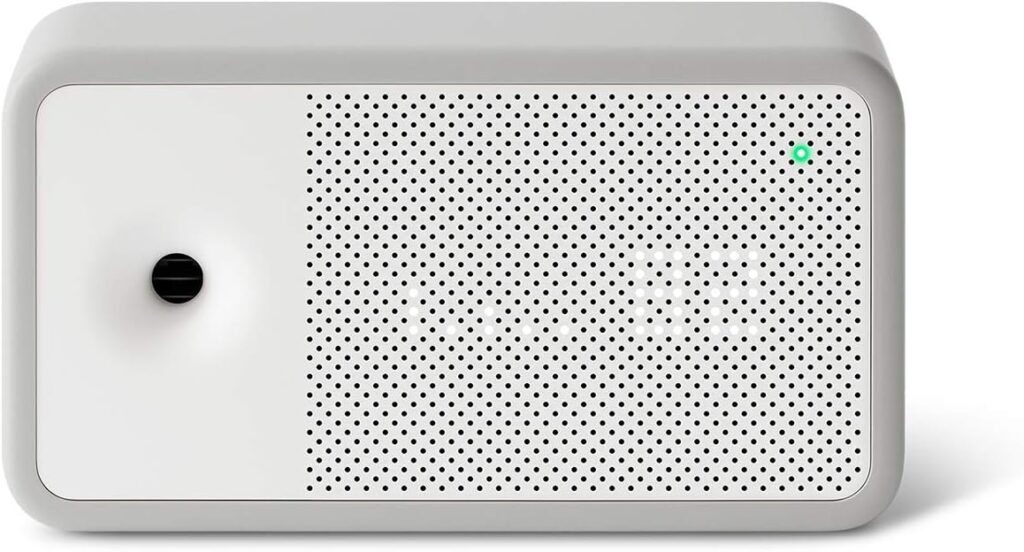
The Awair Element is the best monitor for people who want a clean, easy-to-understand home air quality score.
Awair says the Element tracks five key factors: temperature, humidity, CO2, TVOCs, and PM2.5.
Why it works well at home
The Awair Element is a good everyday monitor because it focuses on the readings that matter most in normal rooms.
It is not as technical as Aranet. It does not include radon like Airthings. But for many homes, the combination of PM2.5, CO2, VOCs, temperature, and humidity is enough to guide better habits.
It is especially useful for people who want alerts like:
- Open a window.
- Run the purifier.
- Turn on the range hood.
- Reduce humidity.
- Stop using a scented product.
- Improve bedroom ventilation.
Who should buy it
Buy the Awair Element if you want:
- A simple dashboard
- A score-based air quality view
- PM2.5, CO2, VOC, humidity, and temperature
- Useful recommendations
- A monitor for bedrooms, offices, and living rooms
Who should skip it
Skip it if you want radon, NOx, open-source controls, or a large screen.
5. Best Compact CO2 and PM Monitor: Qingping Air Monitor Lite
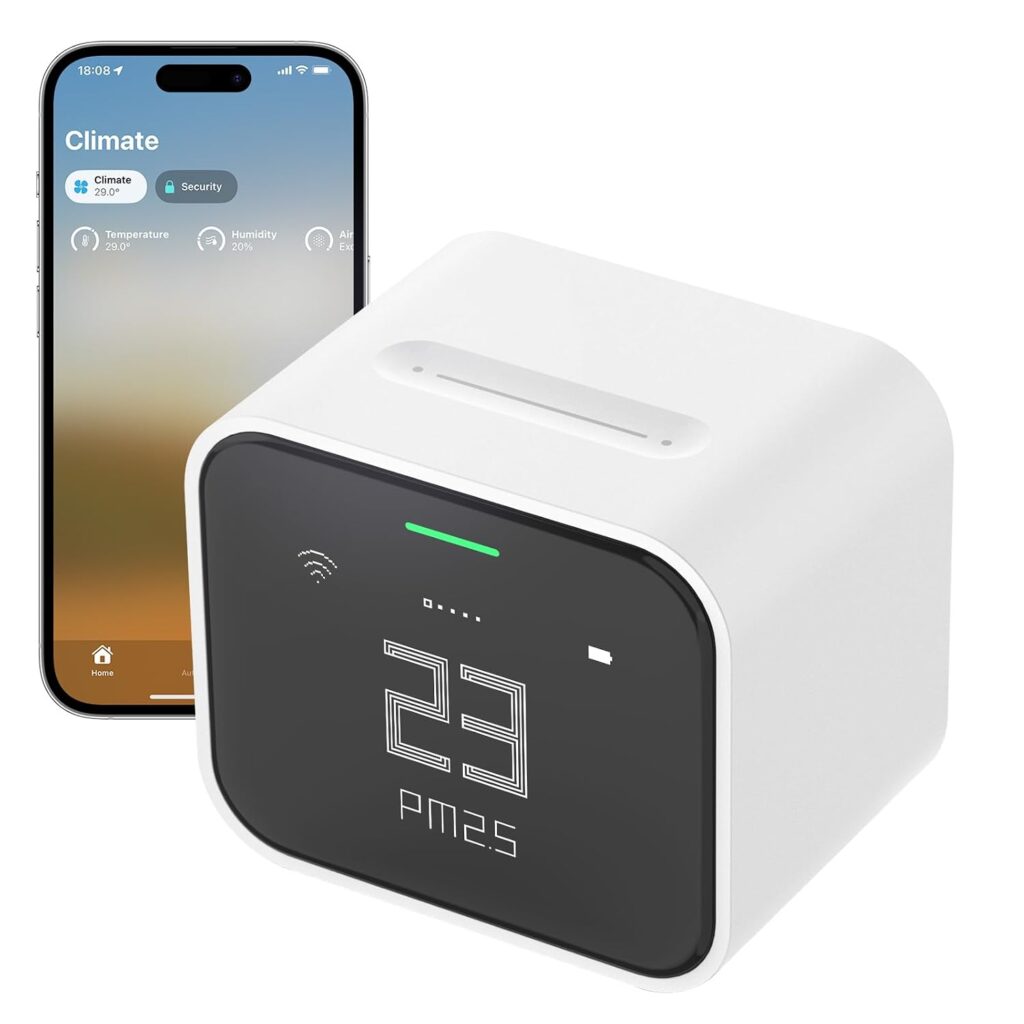
The Qingping Air Monitor Lite is a strong compact choice if you want CO2 and particle readings without a huge device.
Qingping describes the Air Monitor Lite as a 5-in-1 monitor that tracks PM2.5, PM10, CO2, temperature, and humidity.
Why it works well at home
The key here is CO2 plus PM2.5.
Many budget monitors include PM2.5 but skip CO2. That is a problem because CO2 is one of the most useful readings for bedrooms, home offices, nurseries, and classrooms.
Use Qingping if you want to know:
- Whether your bedroom gets stuffy overnight
- Whether a home office needs ventilation
- Whether a purifier is reducing particle levels
- Whether indoor cooking spikes PM2.5
- Whether humidity is drifting too high or too low
Who should buy it
Buy the Qingping Air Monitor Lite if you want:
- A compact display
- CO2 tracking
- PM2.5 and PM10
- Temperature and humidity
- A desk or bedroom monitor
- A simpler alternative to Aranet or IQAir
Who should skip it
Skip it if you want VOC, radon, or a deeper smart-home ecosystem.
6. Best Budget Smart-Home Sensor: IKEA VINDSTYRKA
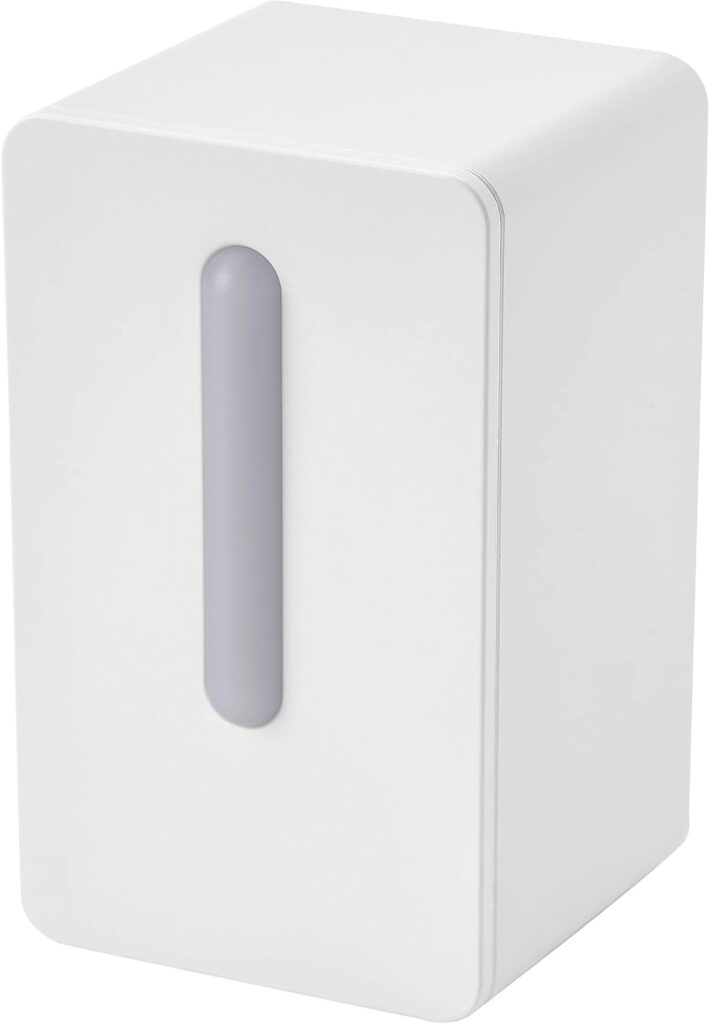
The IKEA VINDSTYRKA is the best budget-friendly smart-home air quality sensor if you are already in the IKEA ecosystem or want a simple PM2.5 display.
IKEA says VINDSTYRKA shows PM2.5, humidity, temperature, and TVOC, and can connect to DIRIGERA or STARKVIND. When connected to DIRIGERA, readings can be viewed in the IKEA Home smart app.
Why it works well at home
VINDSTYRKA is not the most complete monitor, but it is useful for basic particle and comfort tracking.
It makes sense near:
- A kitchen
- An air purifier
- A living room
- A child’s room
- A home office
- A small apartment
It is especially useful if paired with an IKEA STARKVIND air purifier because the monitor can help you understand when particle levels change.
Who should buy it
Buy IKEA VINDSTYRKA if you want:
- A lower-cost PM2.5 monitor
- IKEA smart-home compatibility
- A simple display
- Humidity and temperature readings
- Basic VOC trend awareness
Who should skip it
Skip it if CO2 matters to you. VINDSTYRKA does not measure CO2, which limits its usefulness for bedrooms, offices, and ventilation tracking.
7. Best Alexa Budget Pick: Amazon Smart Air Quality Monitor
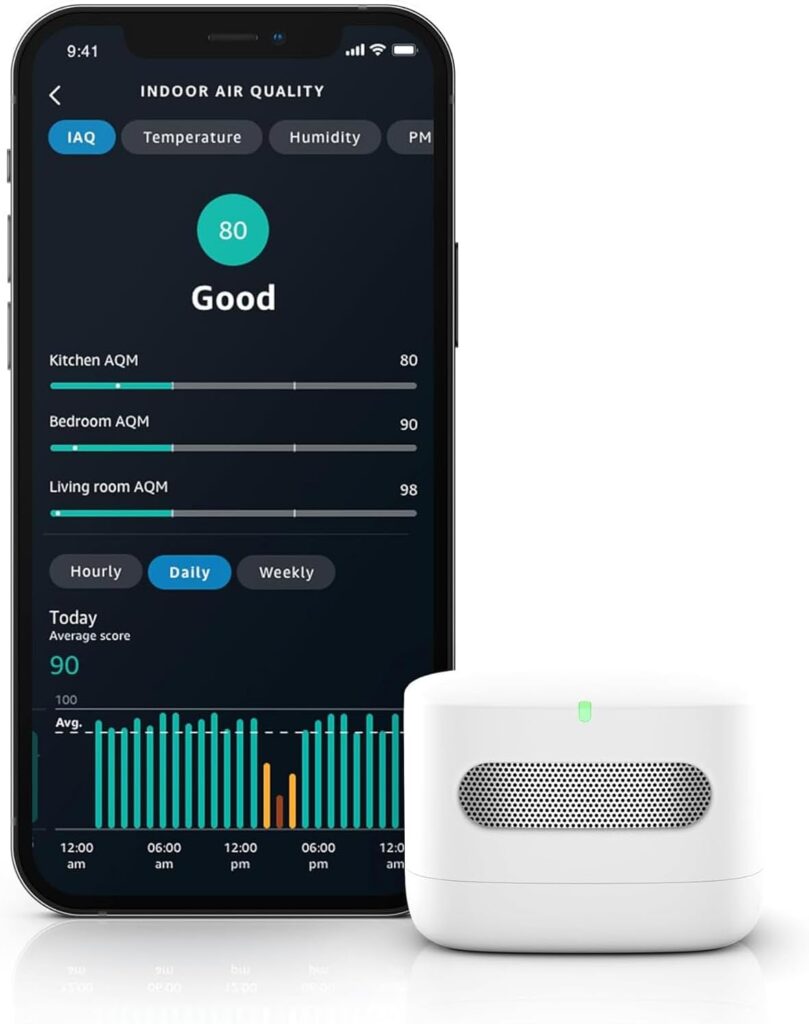
The Amazon Smart Air Quality Monitor is a useful budget pick if your home already uses Alexa.
Amazon says the monitor detects and reports five components: PM2.5, VOCs, carbon monoxide, humidity, and temperature. Amazon also states that it does not measure CO2 or radon.
Why it works well at home
The biggest advantage is Alexa integration.
You can ask about air quality, check the Alexa app, and create routines. For example, you might set a routine that turns on an air purifier when PM2.5 rises, or alerts you if humidity gets too high.
It is a good fit for:
- Alexa homes
- Budget shoppers
- Small apartments
- Air purifier automations
- Basic PM2.5 and humidity tracking
The important caution
Do not treat this as a replacement for a dedicated carbon monoxide alarm.
Even though the Amazon monitor includes CO reporting, the EPA recommends certified CO alarms near sleeping areas. Use a proper CO alarm for safety. Treat the Amazon monitor as an extra smart-home sensor, not your life-safety device.
Who should buy it
Buy the Amazon Smart Air Quality Monitor if you want:
- Alexa integration
- Budget-friendly PM2.5 tracking
- Humidity alerts
- Smart routines
- Basic VOC trend awareness
Who should skip it
Skip it if you need CO2, radon, or a serious standalone display. It is not the best choice for ventilation tracking.
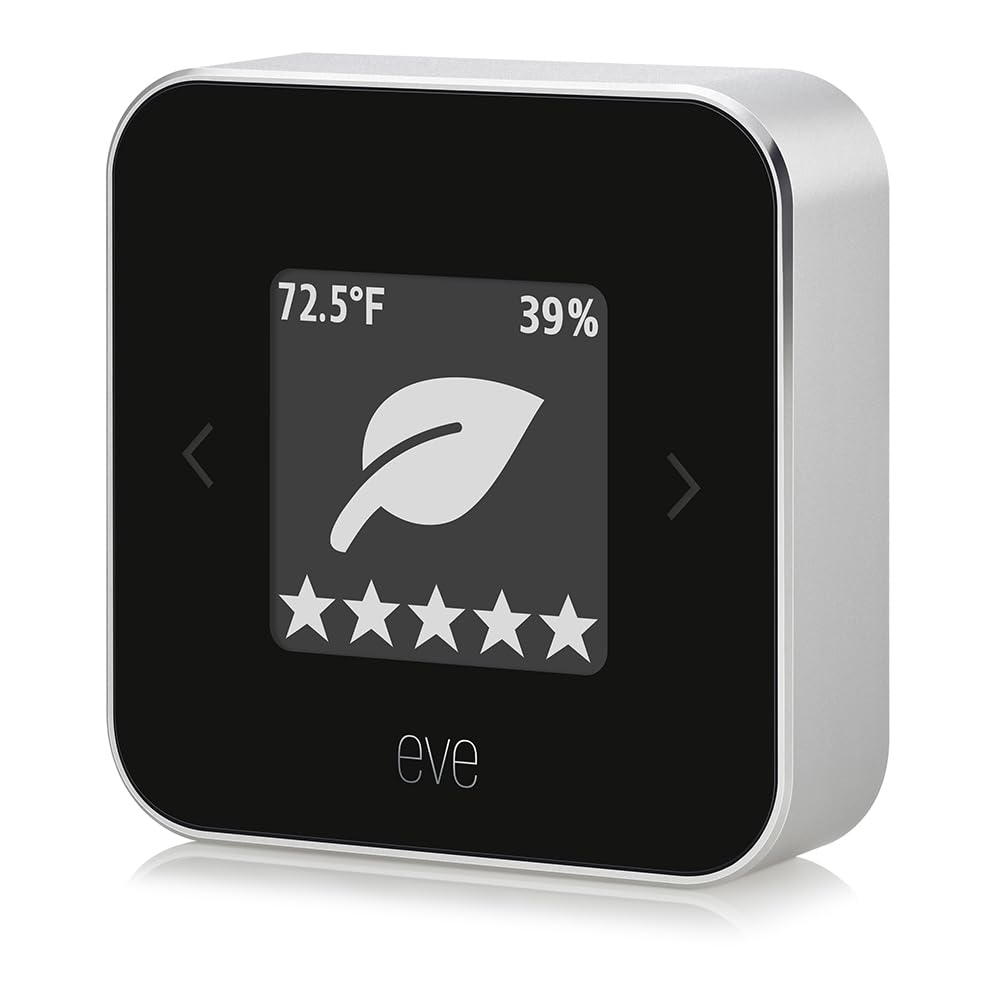
8. Best Apple HomeKit VOC Monitor: Eve Room
The Eve Room is best for Apple HomeKit users who mainly want VOC, temperature, and humidity readings.
Eve says Eve Room monitors VOC concentration, temperature, and humidity, and supports Thread and Bluetooth. Apple’s listing also describes it as measuring VOCs, temperature, and humidity.
Why it works well at home
Eve Room is useful for Apple-focused homes where VOC trends matter.
It can help you notice air quality changes from:
- Cleaning products
- New furniture
- Paint
- Craft supplies
- Scented products
- Cooking odors
- Poor ventilation
Who should buy it
Buy Eve Room if you want:
- HomeKit compatibility
- VOC trend monitoring
- Temperature and humidity readings
- A small wireless monitor
- Apple-friendly automations
Who should skip it
Skip it if you want PM2.5, CO2, radon, or a full indoor air quality picture. Eve Room is a good VOC and comfort monitor, not the best complete air quality monitor for most homes.
Best Air Quality Monitor Comparison Table
Monitor | PM2.5 | CO2 | VOC / TVOC | Humidity | Radon | Best Use |
|---|---|---|---|---|---|---|
Yes | Yes | Yes | Yes | Yes | Best complete home monitor | |
Yes | Yes | Yes | Yes | No | Best data-focused monitor | |
Yes | Yes | No | Yes | No | Best display for PM2.5 and CO2 | |
Yes | Yes | Yes | Yes | No | Best simple dashboard | |
Yes | Yes | No | Yes | No | Best compact CO2/PM monitor | |
Yes | No | Yes | Yes | No | Best budget smart-home sensor | |
Yes | No | Yes | Yes | No | Best Alexa budget pick | |
No | No | Yes | Yes | No | Best Apple VOC monitor |
How to Choose the Best Air Quality Monitor for Your Home
1. Start with the problem you are trying to solve
Do not buy the most expensive monitor just because it measures the most things.
Use this instead:
Your Main Concern | Most Important Reading |
|---|---|
Wildfire smoke | PM2.5 |
Cooking smoke | PM2.5 |
Bedroom stuffiness | CO2 |
Home office fatigue | CO2 |
Chemical smells | VOC / TVOC |
Mold risk | Humidity |
Basement safety | Radon |
Musty smells | Humidity first, then PM/VOC |
Air purifier performance | PM2.5 |
Ventilation habits | CO2 |
Smart purifier automation | PM2.5, humidity, maybe VOC |
2. Make sure it measures CO2 if you care about ventilation
CO2 is one of the most useful readings for daily life.
High CO2 does not mean the air is “toxic” in the dramatic sense. In normal homes, it usually means people are breathing in a closed room without enough fresh air exchange. That makes it useful in bedrooms, classrooms, home offices, nurseries, and small apartments.
If ventilation matters, choose:
- Airthings View Plus
- Aranet 4
- IQAir AirVisual Pro
- Awair Element
- Qingping Air Monitor Lite
Avoid relying on monitors that skip CO2 if your main question is, “Is this room getting stuffy?”
3. Make sure it measures PM2.5 if you care about smoke, cooking, or air purifiers
PM2.5 is the reading that tells you whether tiny particles are in the air.
It is the most useful metric for:
- Wildfire smoke
- Cooking particles
- Candle smoke
- Dust spikes
- Outdoor pollution getting inside
- Testing whether an air purifier is helping
The EPA says indoor PM can come from both outdoor air and indoor sources such as cooking, cleaning, combustion, candles, fireplaces, tobacco smoke, biological contaminants, mold, printers, and chemical reactions.
4. Do not over-trust VOC numbers
VOC readings are useful, but they can be messy.
Many consumer monitors show VOC trends or indexes rather than precise lab-grade chemical identification. That means a VOC spike can tell you “something changed,” but it may not tell you exactly what chemical caused it.
Use VOC readings to notice patterns:
- New furniture
- Paint
- Cleaning sprays
- Fragrances
- Cooking
- Craft supplies
- Stored chemicals
- Poor ventilation
If VOCs rise, the practical response is usually source control and ventilation.
5. Use humidity readings to decide between an air purifier and dehumidifier
Humidity is one of the most actionable readings in the home.
If humidity is too high, an air purifier will not fix the root problem. You may need:
- Bathroom exhaust fan
- Dehumidifier
- Better ventilation
- Leak repair
- AC maintenance
- Less indoor laundry drying
For most homes, aim for a comfortable middle range, often around 40% to 50%. If humidity repeatedly rises above 60%, take it seriously.
6. Take radon seriously if you have a basement or lower-level room
Radon is not something you can smell or see.
If you spend time in a basement, lower-level bedroom, home office, or finished lower level, radon monitoring or testing deserves attention. The EPA identifies radon as the leading cause of lung cancer among non-smokers and the second leading cause overall.
Airthings View Plus is the best pick in this guide if you want radon included in the same device as other air quality readings.
What To Do When Your Air Quality Monitor Shows a Problem
A monitor is only useful if it changes what you do.
Bad Reading | What It Usually Means | What To Do |
|---|---|---|
High PM2.5 | Smoke, cooking, dust, candles, outdoor particles | Run purifier, use range hood, stop source, close windows if outdoor air is bad |
High CO2 | Not enough fresh air | Open door/window if outdoor air is safe, improve ventilation |
High VOC | Chemicals or odors in air | Remove source, ventilate, use carbon filtration |
High humidity | Moisture problem | Use dehumidifier, exhaust fan, AC, check leaks |
Low humidity | Air too dry | Consider humidifier, reduce over-drying |
High radon | Possible long-term risk | Confirm with testing and consider mitigation |
CO alert | Possible safety issue | Leave, ventilate if safe, call emergency/help, rely on certified CO alarm |
The best indoor air plan is not just “buy gadgets.” It is source control first, ventilation second, filtration third, with humidity control when moisture is part of the problem.
Best Air Quality Monitor by Room
Room | Best Monitor Type | Why |
|---|---|---|
Bedroom | CO2 + PM2.5 + humidity | Tracks stuffiness, particles, and sleep comfort |
Nursery | PM2.5 + humidity + VOC | Tracks particles, moisture, and product off-gassing |
Kitchen | PM2.5 + VOC | Cooking can spike particles and odors |
Basement | Radon + humidity + PM2.5 | Basement risks are often radon and moisture |
Home office | CO2 + PM2.5 | Helps with ventilation and air purifier use |
Living room | PM2.5 + CO2 + VOC | Good central room for whole-home habits |
Bathroom area | Humidity | Helps prevent dampness and musty smells |
Workshop/craft room | VOC + PM2.5 | Tracks fumes and particles |
Smoke-prone area | PM2.5 | Most important wildfire/cooking/smoke metric |
Common Air Quality Monitor Mistakes
Buying a monitor that does not measure CO2
If you care about ventilation, bedroom stuffiness, or home office fatigue, CO2 is one of the most useful readings. Many cheaper monitors skip it.
Thinking VOC means “all chemicals identified”
Most consumer VOC sensors are trend tools, not lab analyzers. Use them to spot spikes, not to diagnose exact chemicals.
Treating an air quality monitor as a CO alarm
Do not do this. Use certified carbon monoxide alarms near sleeping areas.
Ignoring humidity
Humidity is often the missing piece. High humidity can make a home feel musty even when particle readings look fine.
Putting the monitor in the wrong place
Do not place it right next to a purifier, open window, candle, stove, bathroom, or HVAC vent unless you are intentionally testing that source. For normal use, place it where people actually spend time.
Buying one monitor and assuming it represents the whole home
Air quality varies by room. A kitchen, basement, bedroom, and office can all behave differently.
Watching the score instead of the individual readings
A single “air quality score” can be helpful, but it can also hide what changed. Always look at the actual reading: PM2.5, CO2, VOC, humidity, or radon.
Final Verdict: What Is the Best Air Quality Monitor for Home Use?
The Airthings View Plus is the best air quality monitor for most homes because it measures the most important combination of household air factors: radon, PM2.5, CO2, VOCs, humidity, temperature, and pressure.
Choose the Aranet 4 if you want open-source data, Home Assistant support, and detailed readings.
Choose the IQAir AirVisual Pro if you want the best visible display for PM2.5 and CO2.
Choose the Awair Element if you want a simpler score-based dashboard.
Choose the Qingping Air Monitor Lite if you want a compact CO2 and PM2.5 monitor.
Choose the IKEA VINDSTYRKA if you want a budget smart-home PM2.5 sensor.
Choose the Amazon Smart Air Quality Monitor if you want Alexa routines and basic air quality alerts, but remember that it does not measure CO2 or radon.
Choose the Eve Room only if you specifically want Apple HomeKit VOC, temperature, and humidity monitoring.
The best air quality monitor for home use is not the one with the prettiest score. It is the one that tells you what to do next: ventilate, filter, dehumidify, remove the source, or test for something more serious.
FAQs
What is the best air quality monitor for home use?
The best air quality monitor for most homes is the Airthings View Plus because it measures radon, PM2.5, CO2, VOCs, humidity, temperature, and air pressure. That makes it more complete than monitors that only measure particles or only measure VOCs.
What should a home air quality monitor measure?
A good home air quality monitor should ideally measure PM2.5, CO2, VOCs, humidity, and temperature. Radon is also important for basements and lower-level living spaces. PM2.5 helps with smoke and particles, CO2 helps with ventilation, VOCs help with chemical spikes, and humidity helps with mold risk.
Do I need CO2 on an air quality monitor?
Yes, CO2 is worth having if you care about ventilation, bedroom air, home office comfort, classrooms, nurseries, or closed rooms. High CO2 usually means the room needs better fresh-air exchange.
Do air quality monitors detect mold?
Most air quality monitors do not directly “detect mold.” Some measure humidity, PM2.5, and VOCs, which can help you spot conditions related to mold or musty air. If you see or smell mold, fix the moisture problem and clean or remove the moldy material.
Are cheap air quality monitors accurate?
Cheap monitors can be useful for trends, but they may not be precise. They are best used to notice changes, such as PM2.5 rising during cooking or CO2 rising overnight. For serious safety issues like carbon monoxide or radon, use dedicated certified devices or proper testing.
Is an air quality monitor better than an air purifier?
An air quality monitor and air purifier do different jobs. The monitor tells you what is happening. The purifier removes particles from the air. Ideally, use the monitor to decide when the purifier should run and whether it is actually helping.
Can an air quality monitor turn on my air purifier?
Some monitors can trigger smart-home routines if they connect to Alexa, Home Assistant, IKEA Home smart, HomeKit, or other platforms. This works best when the monitor measures PM2.5 and the purifier is connected to the same ecosystem.
Where should I put an air quality monitor?
Put it in a room where people spend time, away from direct airflow, windows, stoves, candles, bathrooms, and air purifiers. Bedrooms, living rooms, home offices, nurseries, and basements are the most useful locations.
Do I still need a carbon monoxide detector?
Yes. Even if your air quality monitor reports carbon monoxide, you should still use certified carbon monoxide alarms near sleeping areas. The EPA recommends CO alarms certified to current safety standards and installed near separate sleeping areas.
Other Interesting Articles
- Best Air Purifier for Home: Top 5 Picks That Actually Make a Difference
- PuroAir 240 vs Shark Air Purifier: Which One Should You Buy?
- PuroAir 240 vs Sans Air Purifier: Which One Should You Buy?
- PuroAir 240 vs Levoit 300: Which Air Purifier Is the Better Buy?
- PuroAir 240 vs PuroAir 400: Which One Actually Fits Your Home?
Author Box
HappyHomeNerd helps readers choose practical home comfort products without overbuying. Our guides focus on what matters in real homes: PM2.5, CO2, VOCs, humidity, radon, filtration, ventilation, room size, smart features, and everyday comfort.
Final verdict: Airthings View Plus is the best overall home air quality monitor, Aranet 4 is best for data-focused users, IQAir AirVisual Pro is best for PM2.5 and CO2 visibility, and Amazon, IKEA, Qingping, Awair, and Eve are better for more specific smart-home needs.
“Why it works for thresholds the saros models use an adaptive chassis system that helps the robot cross taller transitions.”
— vacuumspal.com