I'm a participant in the Amazon Services LLC Associates Program, an affiliate advertising program designed to provide a means for me to earn fees by linking to Amazon.com and affiliated sites.
PuroAir 240 vs Sans Air Purifier isn’t a “which is better” battle. It’s a room-size math battle. This should make it fairly simple to choose the right one, but we still want to show you everything that both of these powerful air purifiers offer so that you know which one meets your needs.
Verdict:
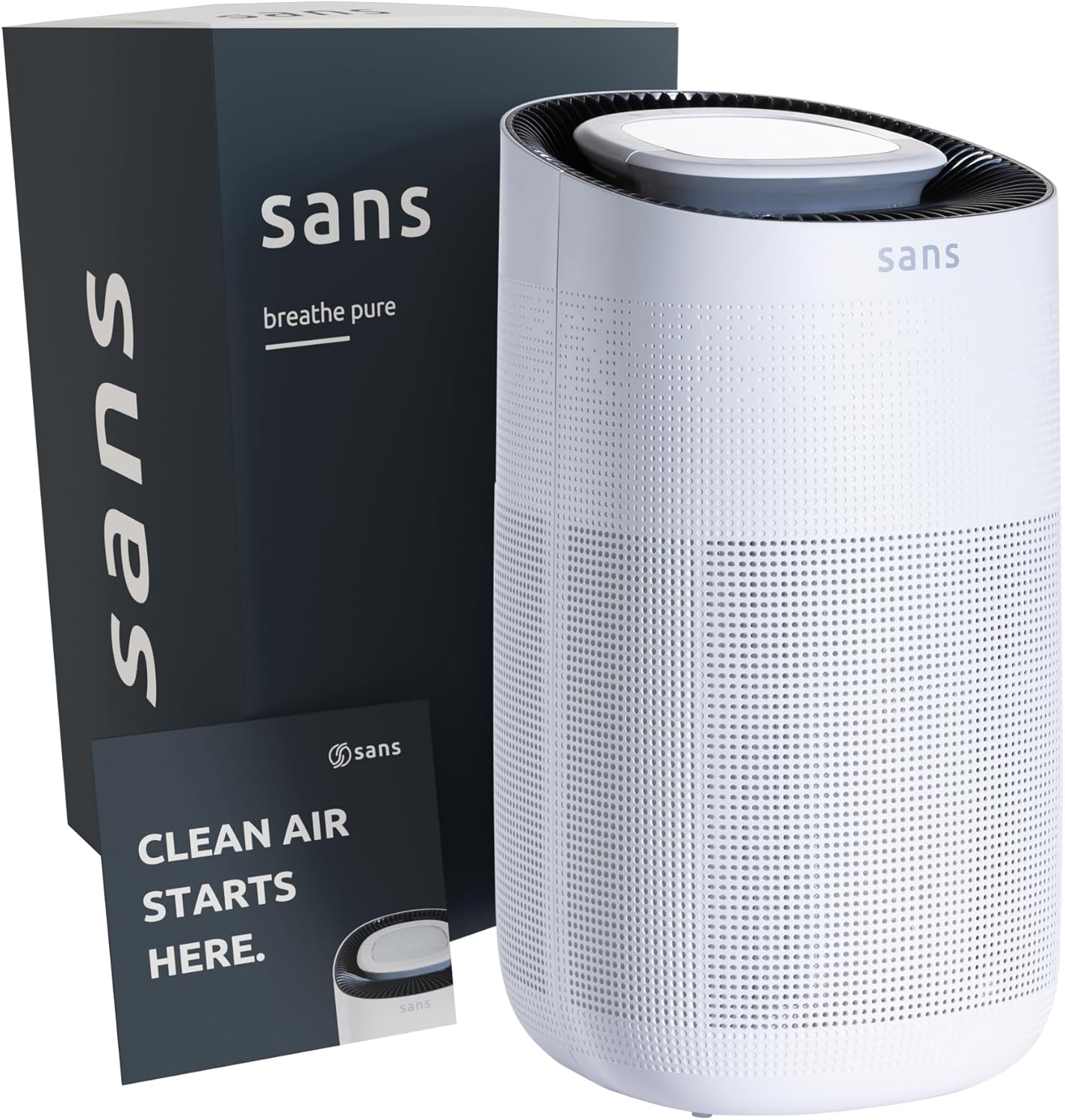
- Buy the Sans Air Purifier if you’re trying to clean a large living room, open layout, or whole-floor space with one unit. It publishes a strong CADR (and third-party reviewers echo it), which usually translates to faster real-world cleaning.
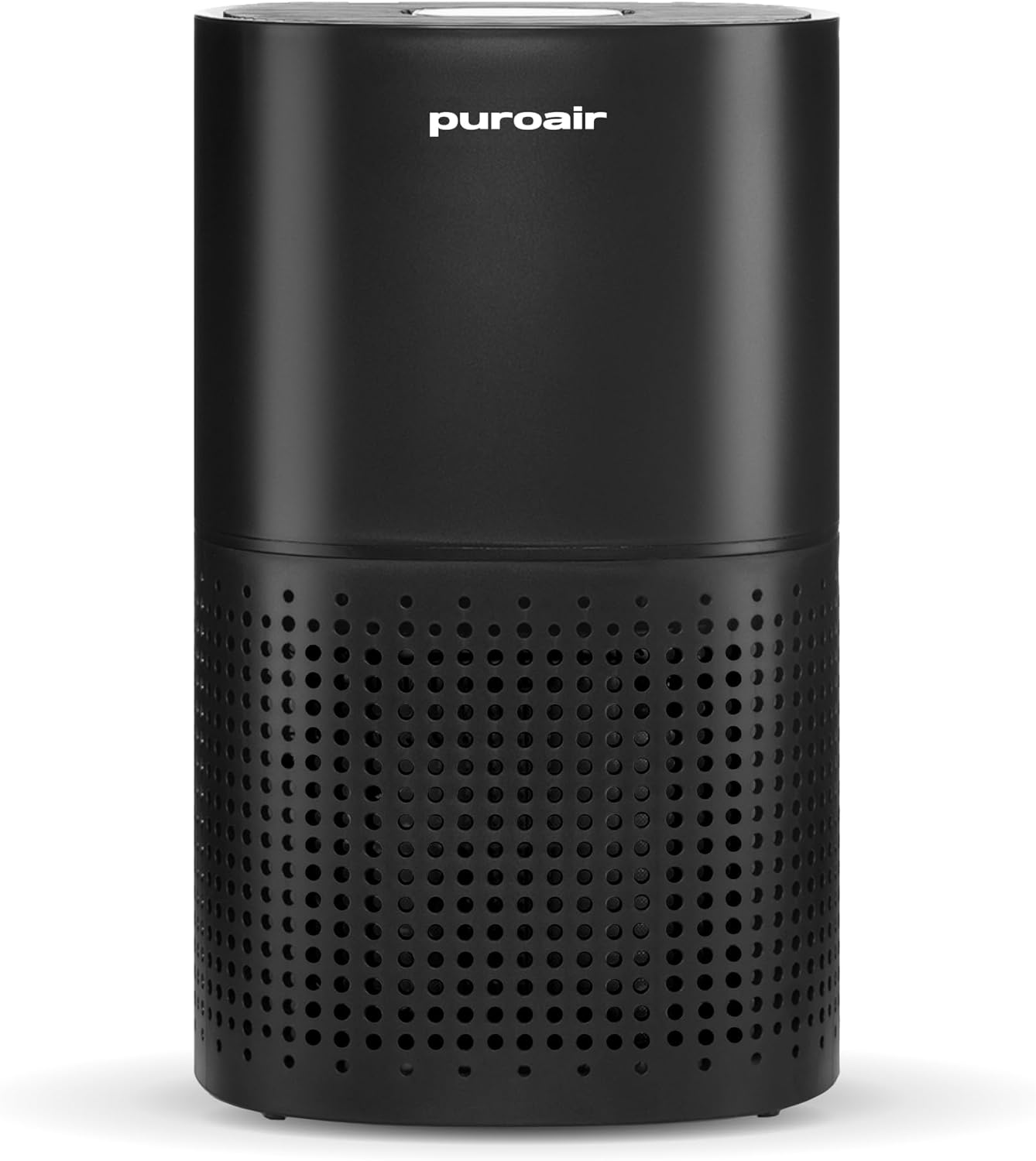
- Buy the PuroAir 240 if you want a compact bedroom purifier and you’re okay treating its “up to 1,000 sq ft” claim as marketing, not a guarantee of fast cleaning. Independent testing summaries suggest a much smaller “fast-cleaning” room recommendation than the headline claim.
Why this matters: if the airflow doesn’t match your space, your “air purifier” becomes a fancy white-noise machine.
PuroAir 240 vs Sans Comparison Table
 |  | |
|---|---|---|
Best for | Bedrooms, nurseries, offices | Living rooms, open layouts, bigger spaces |
Published CADR | Not clearly featured on main product page | 420 m³/hr (~247 CFM) |
Coverage claims | “Up to 1,000 sq ft” marketing | “Up to 1,854 sq ft” marketing |
Filtration stack (as listed) | HEPA + carbon; particulate + VOC detection mentioned | Pre-filter + HEPA 13 + carbon + UV-C inside unit |
Noise (stated) | 22–48 dB | 25–53 dB (review spec sheet) |
Size / footprint | Compact: 8.7″ x 8.7″ x 14.2″ | Larger: 20″ H x 10″ W x 11.5″ D |
Weight | 7.3 lb | 11 lb |
Filter replacement notes | Subscription mentioned for lifetime warranty | Review notes ~3-month filter change cadence |
Bottom-line pick | Best compact bedroom option | Best one-unit main-room option ✅ |
Price |  | |
What Others Get Wrong, and What We’re Fixing
Other resources will gloss over some facts Most of them:
- Lead with square footage claims and skip the more useful metric: CADR and air changes per hour (ACH).
- Don’t convert units, so shoppers can’t compare apples-to-apples (Sans lists CADR in m³/hr; many shoppers think in CFM).
- Hide the “real” room size (the size where it cleans fast) behind “up to” wording.
- Gloss over trade-offs like: UV-C being inside the unit (benefit), filter change frequency (cost + hassle), and noise at higher speeds (real-life annoyance).
So we’re beating them with: clearer sizing logic, a cleaner table, and honest “who should buy what” use-cases.
Quick Snapshot: Sans vs PuroAir 240 Air Purifier
PuroAir 240
- Best for: Bedrooms, nurseries, offices
- Biggest win: Compact, quiet-leaning specs on paper
- Biggest trade-off: Coverage claims feel bigger than what CADR-style comparisons suggest
Sans Air Purifier (Regular)
- Best for: Living rooms, open-concept spaces, “one purifier for the main area” setups
- Biggest win: Strong published CADR + sensor display + UV-C inside the unit
- Biggest trade-off: Larger unit and more frequent filter changes noted by reviewers
| | |
|---|---|---|
Best for | Bedrooms, nurseries, offices | Living rooms, open layouts, bigger spaces |
Published CADR | Not clearly featured on main product page | 420 m³/hr (~247 CFM) |
Coverage claims | “Up to 1,000 sq ft” marketing | “Up to 1,854 sq ft” marketing |
Filtration stack (as listed) | HEPA + carbon; particulate + VOC detection mentioned | Pre-filter + HEPA 13 + carbon + UV-C inside unit |
Noise (stated) | 22–48 dB | 25–53 dB (review spec sheet) |
Size / footprint | Compact: 8.7″ x 8.7″ x 14.2″ | Larger: 20″ H x 10″ W x 11.5″ D |
Weight | 7.3 lb | 11 lb |
Filter replacement notes | Subscription mentioned for lifetime warranty | Review notes ~3-month filter change cadence |
Bottom-line pick | Best compact bedroom option | Best one-unit main-room option ✅ |
Price | | |
What Actually Matters (So You Don’t Pick the Wrong One)
1) CADR beats “Up to X sq ft”
CADR is the practical “how much clean air per time” number. AHAM explains why it matters (and why higher is generally better).
- Sans lists CADR 420 m³/hr, which is about 247 CFM (the same value a third-party review reports).
- PuroAir markets “up to 1,000 sq ft,” but independent review coverage notes a much smaller room recommendation in an AHAM-related report context.
2) Room layout can double your purifier needs
A closed bedroom is easy. An open kitchen + living room combo is not.
- Closed rooms → PuroAir 240 can be enough.
- Open layouts → Sans is more likely to keep up without living on max fan.
3) Sensors are nice, but airflow does the heavy lifting
Both brands talk sensors and “auto” behavior.
In real life, airflow + filter determines results. Sensors just decide when to ramp.
Real-World Scenarios (Major Differences)
If you want one purifier for the “main space”
Think: living room + kitchen air mixing, pets wandering, cooking smells, a lot of activity.
Sans is the safer bet because the published CADR is higher and the unit is built for bigger coverage targets.
If this is for sleep (bedroom/nursery)
You’re usually running low to medium, all night.
PuroAir 240 makes sense if the room is modest and you want a compact unit with quiet-leaning specs.
If you’re sensitive to “UV-C” as a feature
Sans positions UV-C as internal and part of the filtration system story.
That can be a plus for peace of mind — but it’s not a substitute for airflow or a reason to undersize your purifier.
Pros & Cons (The Real Ones)
PuroAir 240: Pros
- Compact and easy to place anywhere
- Quiet spec range is appealing for bedrooms
- Simple “set it and run it” positioning
PuroAir 240: Cons
- “Up to 1,000 sq ft” claim can mislead buyers into oversizing expectations
- Harder to compare on airflow because CADR isn’t front-and-center on the main page
Sans: Pros
- Strong published CADR (and consistent third-party reporting)
- Designed for bigger, more demanding spaces
- Sensors + real-time AQI display + UV-C inside unit
Sans: Cons
- Bigger and heavier (you’ll notice it in a bedroom)
- Reviewer notes filters may need changing around every 3 months (budget for it)
- Some buyers report mixed experiences depending on where they purchased (worth noting if you’re shopping marketplaces)
FAQs – Sans Air Purifier vs PuroAir 240
Is Sans actually stronger than the PuroAir 240?
On paper, yes, Sans publishes CADR (420 m³/hr, ~247 CFM) and third-party review specs align with that, which typically means faster cleaning in larger rooms.
Can PuroAir 240 really clean 1,000 square feet?
It’s marketed as “up to 1,000 sq ft,” but independent coverage suggests the “fast-cleaning” room size is much smaller than the headline claim.
Which is better for bedrooms?
If your bedroom is average-sized, PuroAir 240 is the more natural fit because it’s compact and pitched for quieter operation.
Does UV-C in an air purifier matter?
It can help neutralize what’s trapped inside the unit, but it doesn’t replace proper sizing. Airflow and filter performance still determine how quickly your room air gets cleaned.
How do I pick the right size air purifier for my room?
Use CADR and aim for multiple air changes per hour (ACH) for allergies and smoke. “Up to” square footage is often a best-case number, not a comfort guarantee.
Final Take (What We’d Tell a Friend)
If you’re shopping for a big, lived-in space, Sans is the smarter buy. The published CADR and third-party specs make it easier to trust for real coverage.
If you’re shopping for sleep and smaller rooms, PuroAir 240 can work well, just don’t buy it expecting “whole-home” performance from the “up to 1,000 sq ft” headline.
Other Interesting Articles
- Amazon Echo Show 5 vs 15: Which Amazon Echo Show is Best?
- Amazon Echo Show 5 vs Echo Dot: Which One Should You Buy?
- Amazon Echo Show 5 vs Echo Spot: Which One Should You Buy?
- Amazon Echo Show 5 vs 8 3rd Generation – Which is Better?
About the Author
Written by HappyHomeNerd, your trusted guide for smart home reviews, troubleshooting, and everyday tech fixes. Visit HappyHomeNerd for more expert tips and product breakdowns.