I'm a participant in the Amazon Services LLC Associates Program, an affiliate advertising program designed to provide a means for me to earn fees by linking to Amazon.com and affiliated sites.
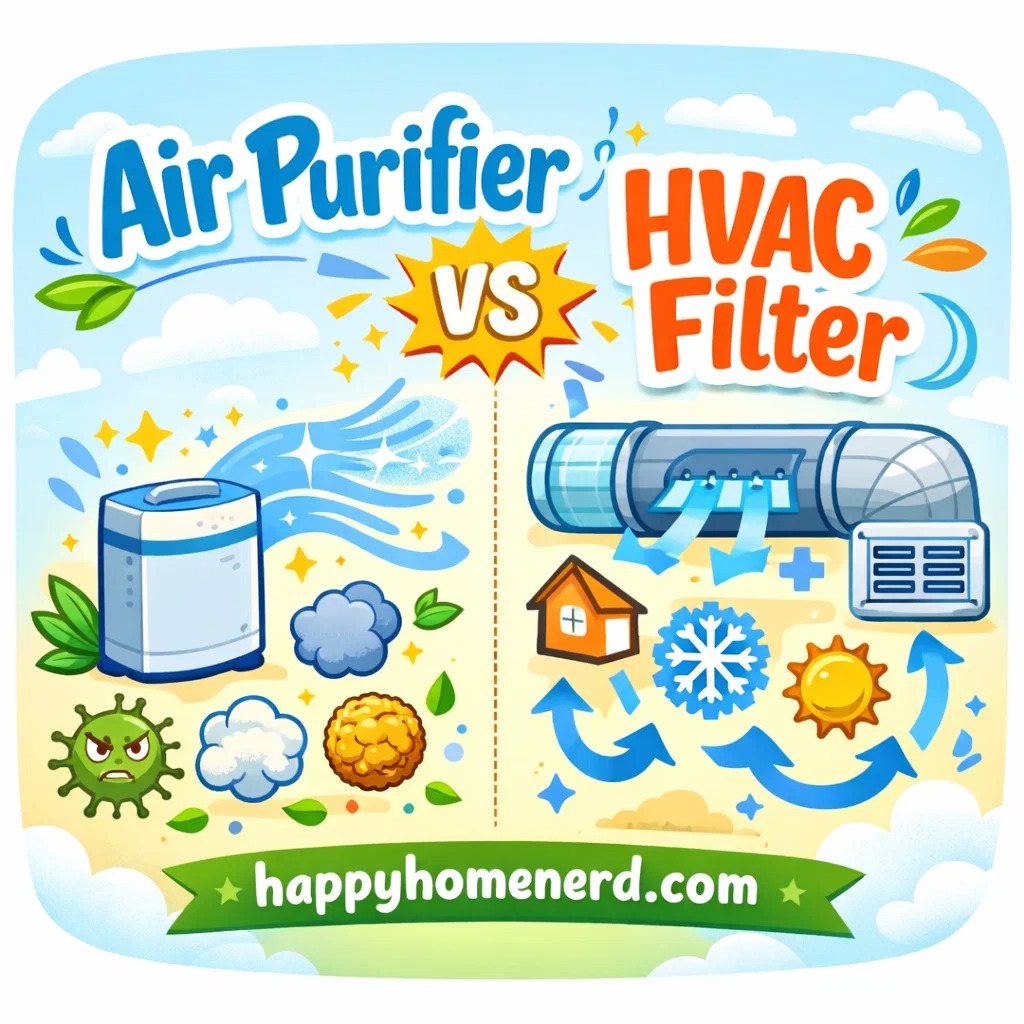
For most homes, you want both: a good HVAC filter (ideally MERV 13 if your system can handle it) plus a portable HEPA air purifier in the rooms you actually live in. The HVAC filter helps when your system is running, while a purifier gives you consistent, room-level cleaning you can feel. We’ll go into more detail below with our Air Purifier vs HVAC Filter analysis.
If you can only do one right now, don’t guess. Pick based on what problem you’re solving (allergies in a bedroom vs whole-home dust vs wildfire smoke).
Our Recommended Picks
Feature | |||||
|---|---|---|---|---|---|
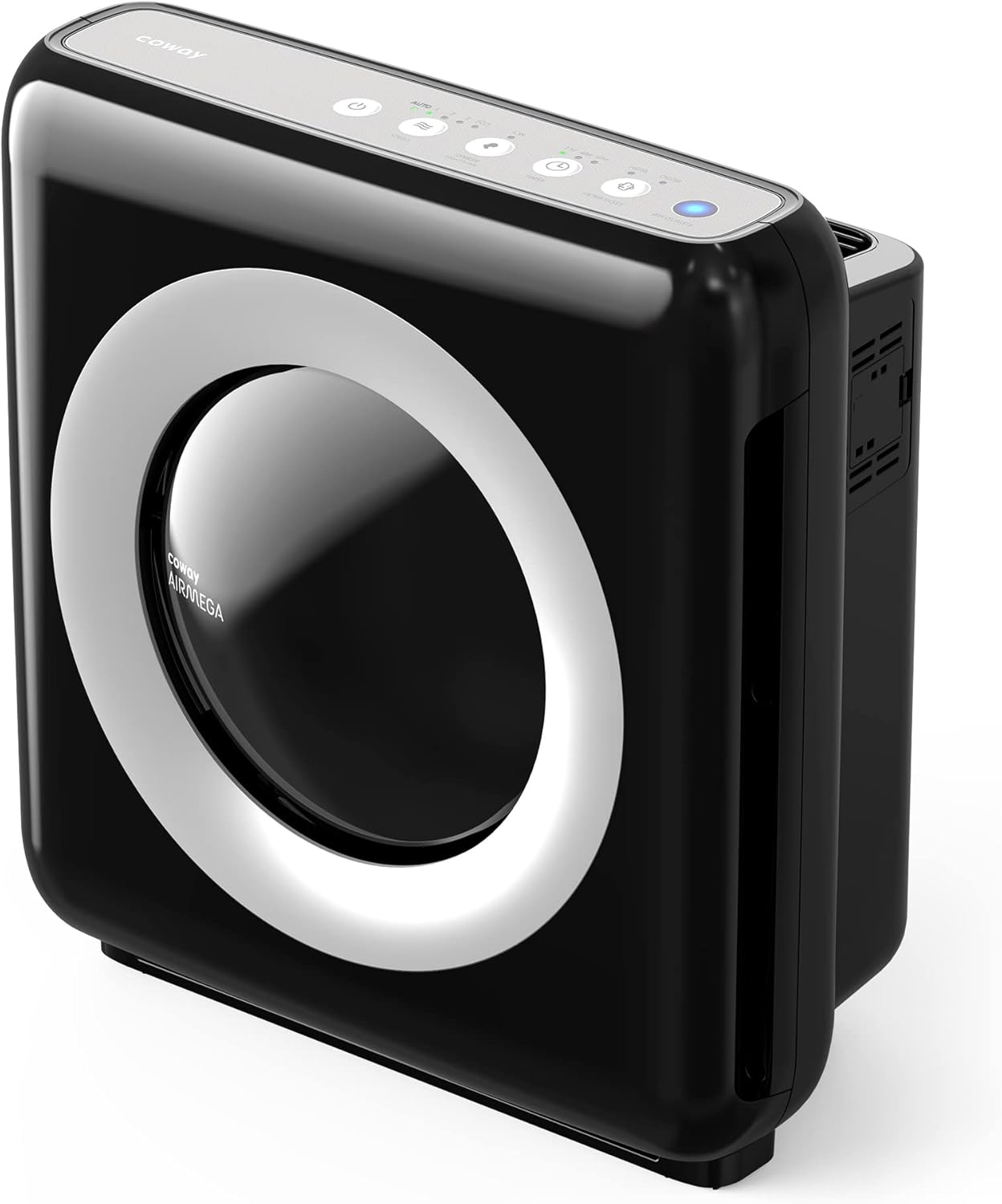 | 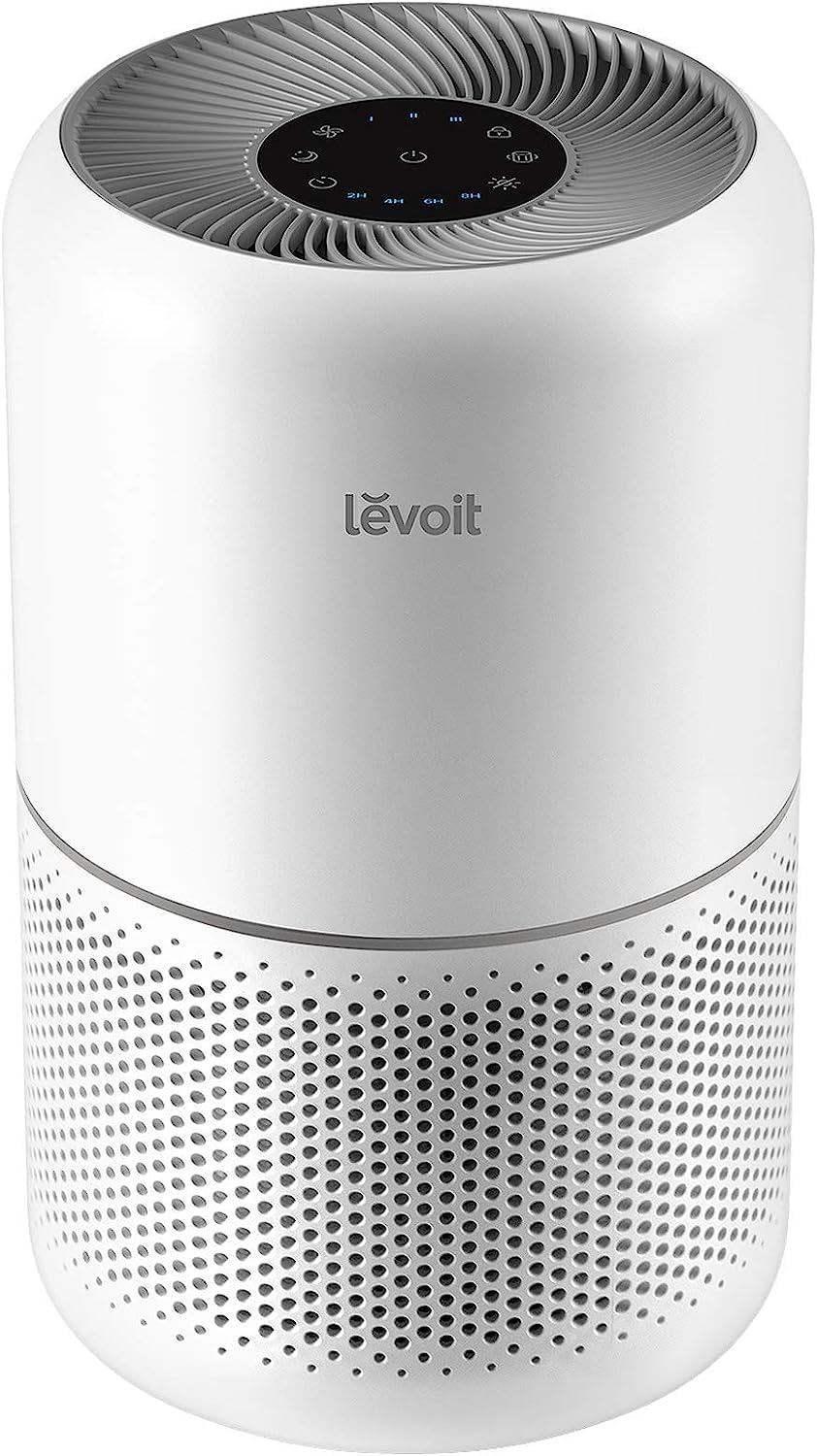 | 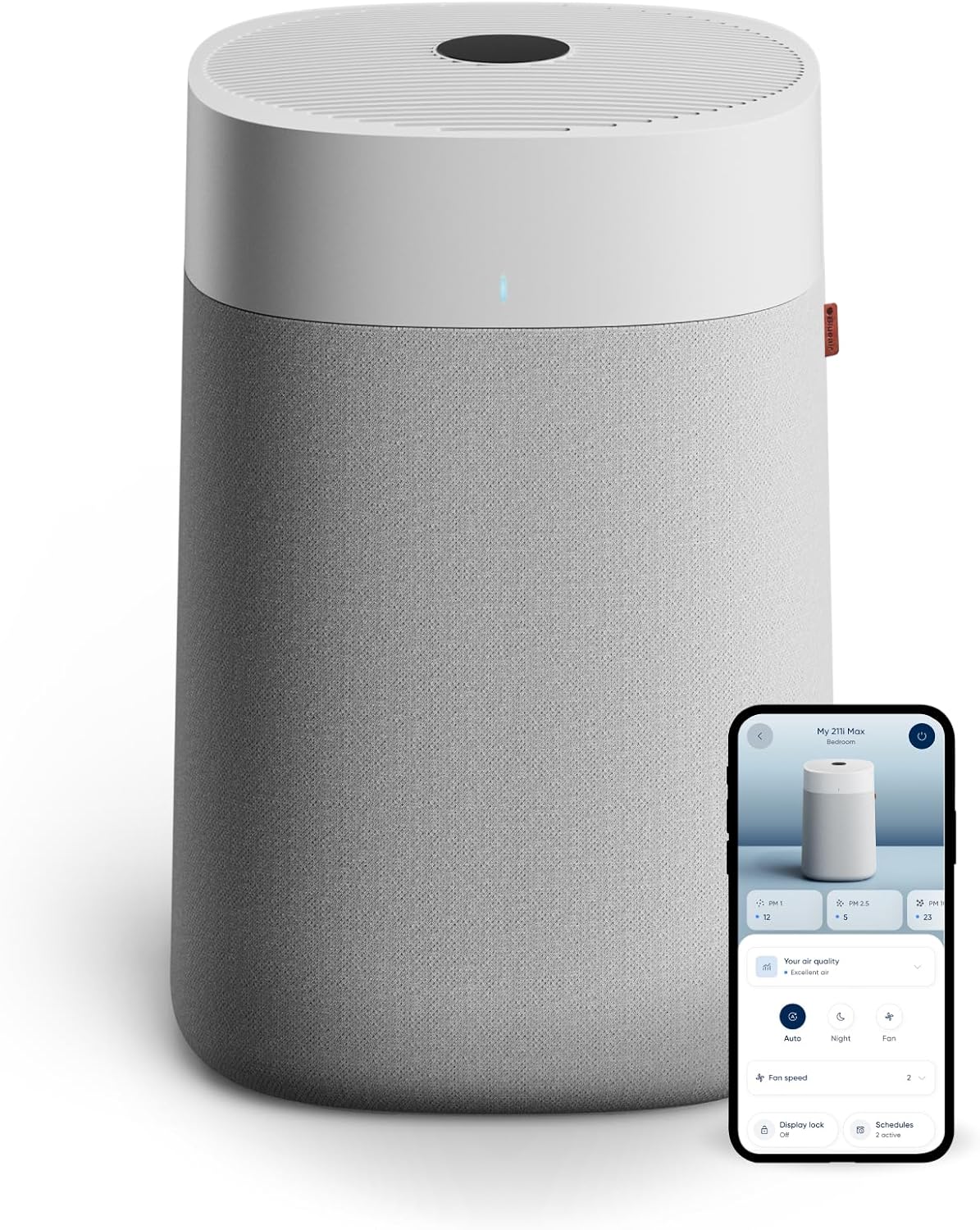 | 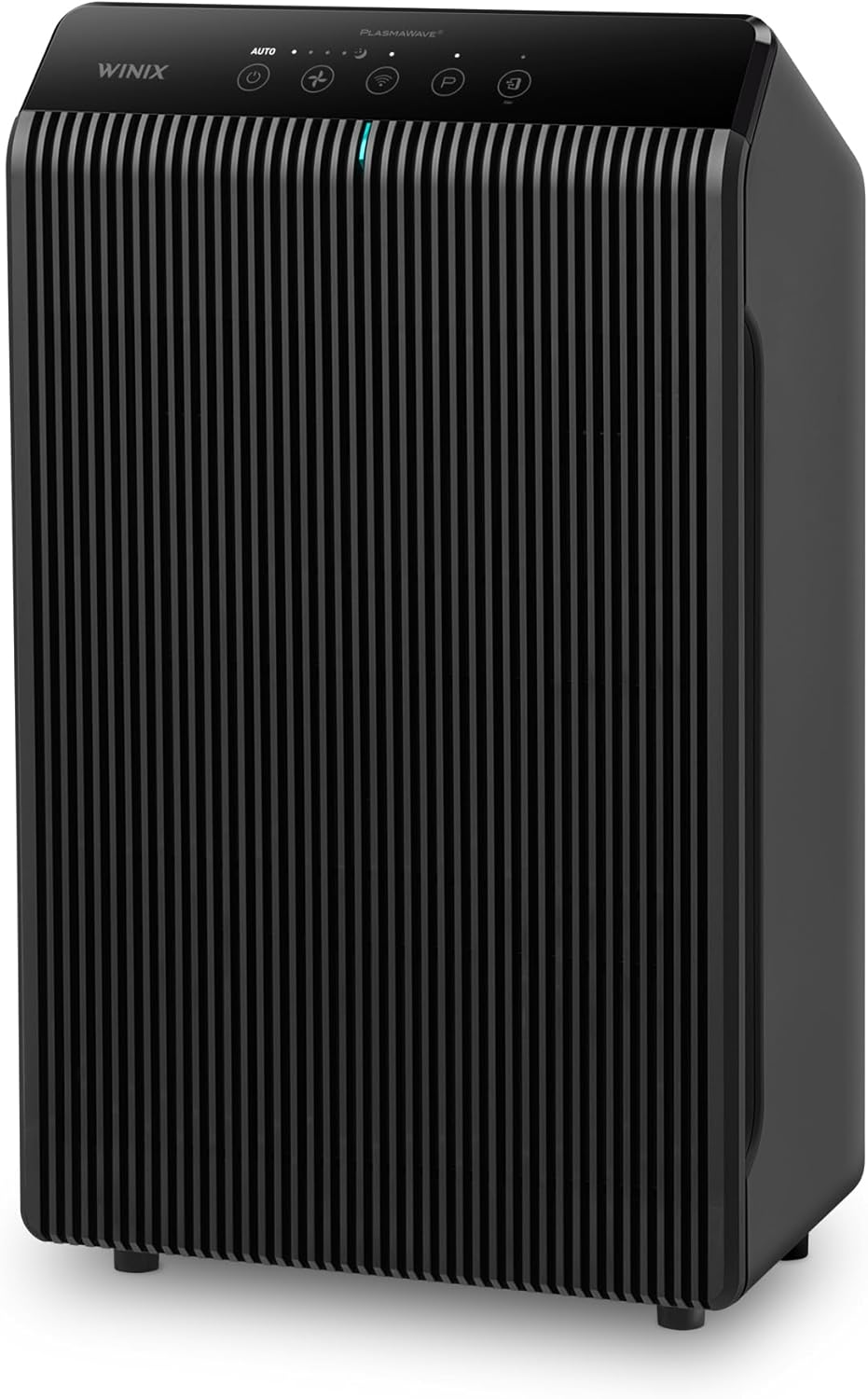 | 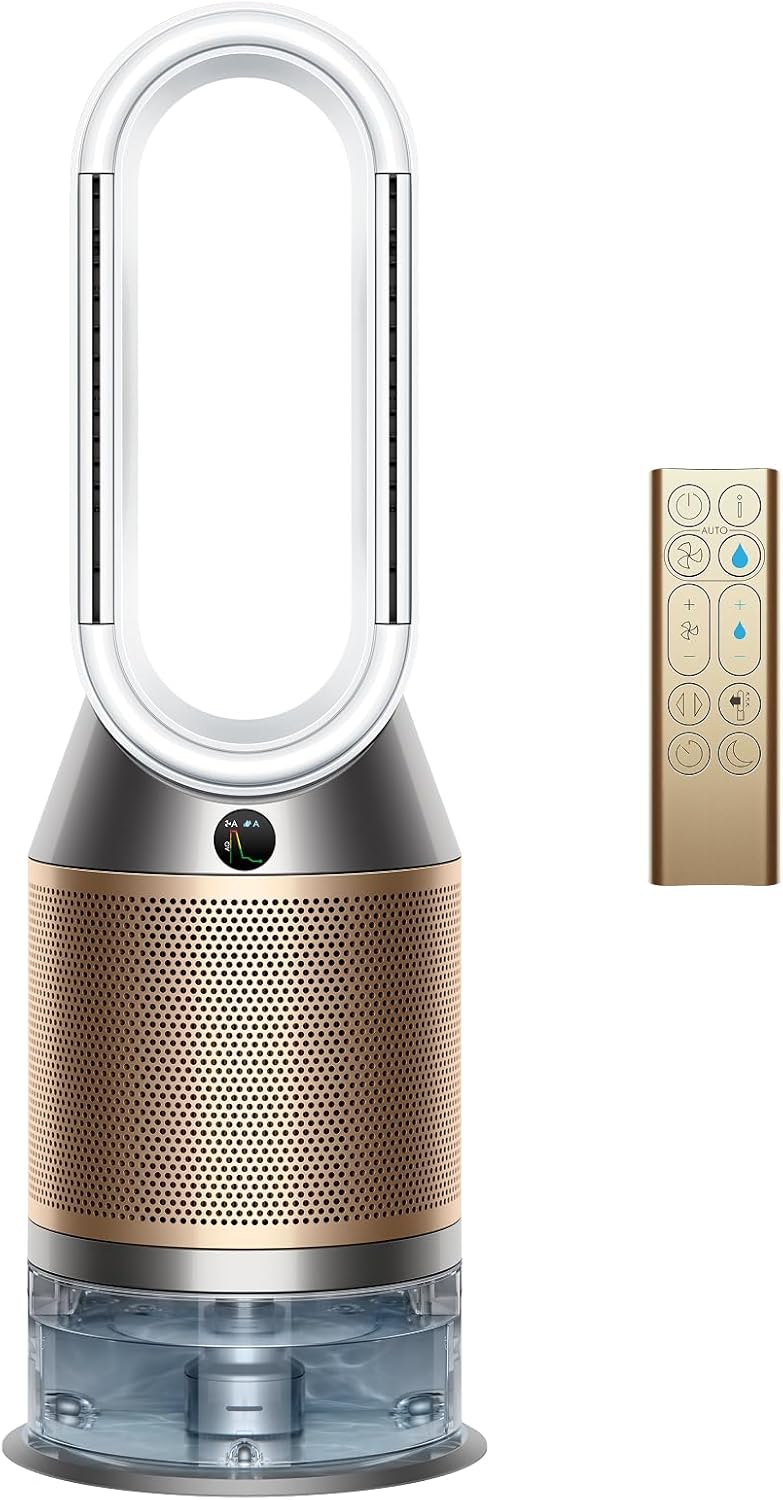 | |
Best for | Most homes (best “all-around”) | Bedroom / small rooms + smart control | Large rooms + open layouts | Pets + odor-leaning homes | Premium: purify + humidify + cooling |
Why it wins | Reliable performance + widely recommended | Strong usability + app/voice convenience | High CADR headroom for big spaces | Pet dander favorite + solid value testing | Multi-function comfort + advanced sensing |
“Real-life” strength | Easy to live with daily | Great “set it and forget it” | Big-room confidence | Smells + fur + everyday dust | One device replaces multiple appliances |
Watch-outs | Not the quietest on max | Not for huge open floor plans | Big footprint | Has ionizer feature (often optional) | Expensive + bigger maintenance routine |
Smart/app | Varies by version; strong basics | Yes (VeSync) | Yes (smart built-in) | Typically basic controls | Yes (MyDyson) |
Credible “why trust it” signal | Common top-pick in major roundups | Named best overall in testing roundup | Reported high CADR + large-room suitability | Stands out for pet dander in testing | Lab-tested favorite among purifier+humidifier combos |
Price |  | | | | |
Quick Snapshot
HVAC filter is best for:
- Whole-home baseline particle reduction (when the fan is running)
- Catching bigger household particles (dust, lint) and improving overall cleanliness
Portable air purifier is best for:
- Noticeable improvement in one room (bedroom/living room)
- Smoke events, allergies, pets—where you want higher “clean-air speed” using CADR
What Top Articles Get Wrong (And What We’re Fixing)
Most “air purifier vs HVAC filter” posts:
- Pretend it’s an either/or debate, when the practical answer is usually both.
- Don’t explain the biggest limiter: HVAC filtration only works when the system fan is running, and leaks/fit matter.
- Skip the “compatibility reality”: MERV 13 is recommended, but not every system can handle it without airflow/pressure drop issues.
- Don’t give a clean decision rule for budgets.
So here’s the simple, buyer-useful version.
What an HVAC filter actually does (and doesn’t)
Your HVAC filter sits in the return path and filters air only as your system moves air.
That means:
- If your heat/AC isn’t running much, your filter isn’t cleaning much air.
- If the filter doesn’t fit well or air bypasses it, performance drops.
“Should I upgrade my HVAC filter?”
EPA and CDC both point to MERV 13 or higher as a meaningful upgrade when compatible with your system.
But there’s a catch: higher MERV can mean more resistance, which can reduce airflow or increase fan energy—ASHRAE explicitly calls this out.
HappyHomeNerd reality check: If your system can’t handle MERV 13, use the highest MERV it can and lean harder on a purifier in the rooms that matter.
Quick Picks for Best Air Purifier
- Best overall for most homes: Coway Airmega AP-1512HH Mighty
- Best smart-value for bedrooms/small living areas: Levoit Core 300S
- Best for large rooms + open layouts: Blueair Blue Pure 211i Max
- Best for pets (dander + lingering smells) on a sane budget: Winix 5500-2
- Best premium “air-care system” (purify + humidify + cool): Dyson Purifier Humidify+Cool PH2 De-NOx
What a portable air purifier actually does (and doesn’t)
A portable air purifier is a dedicated fan + filter system designed to clean one space well.
The performance spec that matters most is CADR (Clean Air Delivery Rate)—how quickly it delivers filtered air. Energy Star describes CADR as the key measure for room air cleaner performance.
What purifiers are great at
- Particles: dust, pollen, smoke PM, pet dander (especially with HEPA)
What purifiers are not automatically great at
- Odors/VOCs: this depends on carbon amount and design; there isn’t a widely used, universal rating system the way CADR exists for particles.
Feature | |||||
|---|---|---|---|---|---|
| | | | | |
Best for | Most homes (best “all-around”) | Bedroom / small rooms + smart control | Large rooms + open layouts | Pets + odor-leaning homes | Premium: purify + humidify + cooling |
Why it wins | Reliable performance + widely recommended | Strong usability + app/voice convenience | High CADR headroom for big spaces | Pet dander favorite + solid value testing | Multi-function comfort + advanced sensing |
“Real-life” strength | Easy to live with daily | Great “set it and forget it” | Big-room confidence | Smells + fur + everyday dust | One device replaces multiple appliances |
Watch-outs | Not the quietest on max | Not for huge open floor plans | Big footprint | Has ionizer feature (often optional) | Expensive + bigger maintenance routine |
Smart/app | Varies by version; strong basics | Yes (VeSync) | Yes (smart built-in) | Typically basic controls | Yes (MyDyson) |
Credible “why trust it” signal | Common top-pick in major roundups | Named best overall in testing roundup | Reported high CADR + large-room suitability | Stands out for pet dander in testing | Lab-tested favorite among purifier+humidifier combos |
Price | | | | | |
Do you need both? Use this quick decision guide
You probably need BOTH if…
- You have allergies and you spend lots of time in one room (bedroom/office).
- You want whole-home baseline improvement plus noticeable room-level relief.
- You deal with wildfire smoke or seasonal spikes and want a “clean room” setup.
You can choose HVAC filter only if…
- Your HVAC fan runs a lot (or you’re willing to run it more).
- Your main goal is general household dust reduction, not fast relief in one room.
- You can upgrade filtration (MERV 13+ if compatible) and keep good replacement habits.
You can choose a portable purifier only if…
- You rent, your HVAC system is limited, or you can’t run the fan much.
- Your problem is concentrated: bedroom allergies, pets in the living room, smoke sensitivity.
- You want the clearest “I can feel it” upgrade right away (size it by CADR).
Real-life scenarios (the ones that actually happen)
Scenario 1: “My bedroom allergies are killing me”
Get a portable HEPA purifier sized to your bedroom first.
Then upgrade your HVAC filter second (if compatible).
Reason: you sleep 7–9 hours in one room. Targeted cleaning wins.
Scenario 2: “My house always feels dusty”
Upgrade your HVAC filter (as high as your system can handle) and focus on fit + replacement. EPA recommends MERV 13+ where possible.
Add a purifier later if you want faster cleanup in your main room.
Scenario 3: “Wildfire smoke season”
Create a clean room and run a high-CADR purifier there.
HVAC filtration helps, but the purifier is what gives fast, room-specific protection.
Scenario 4: “Pets + that lingering smell”
Do both if possible: HVAC filter upgrade for baseline + purifier where pets hang out.
And remember: odors are carbon-dependent, not just “HEPA = no smell.”
How to do it right (without wasting money)
If you’re upgrading your HVAC filter
- Aim for MERV 13+ if your system supports it.
- If unsure, ask an HVAC tech what MERV your system can handle (pressure drop is real).
- Run the system fan more when air quality matters (filtration requires airflow).
- Make sure the filter is installed correctly and accessible (DOE guidance highlights proper placement).
If you’re buying a portable purifier
- Use CADR to size it (don’t buy off “up to X sq ft” alone).
- Put it where you breathe most: bedroom near the bed, living room near the seating zone.
- Plan on filter replacements and actually do them.
5 myths that cause bad purchases
- “My HVAC filter is basically a HEPA.”
It can be helpful (especially MERV 13+), but it’s not the same as a dedicated HEPA unit running in the room you’re in. - “A purifier will fix odors automatically.”
Particle ratings are common. Gas/odor performance ratings aren’t universally standardized. - “If it says ‘covers 1,000 sq ft,’ I’m good.”
CADR tells you the speed; room claims can be marketing. - “Higher MERV is always better.”
Not if it chokes your system. Use the highest MERV your HVAC can handle. - “I don’t need a purifier if I upgrade my filter.”
If you want noticeable improvement in a bedroom or clean-room protection, a purifier is often the fastest path.
FAQs: Air Purifier vs HVAC Filter
Is an air purifier better than an HVAC filter?
They’re different tools. HVAC filtration is whole-home baseline when the fan runs; a purifier is targeted, high-speed cleaning in a room (use CADR to compare).
Do I need an air purifier if I have a MERV 13 filter?
Often yes—especially for bedrooms, pets, or smoke season. MERV 13 helps (if compatible), but room-level HEPA + CADR gives faster noticeable results where you spend time.
What MERV rating should I use at home?
EPA and CDC point to MERV 13 or higher when your system can accommodate it. If not, use the highest MERV that won’t cause airflow issues.
Can air purifiers help with viruses?
They can reduce airborne contaminants when used properly, but they’re part of a broader plan (ventilation + filtration + other measures depending on context).
What’s the simplest “best setup” for a normal home?
Upgrade HVAC filtration as far as your system allows, then put a good HEPA purifier in the bedroom and/or main living area.
Final Take
If you want the cleanest, most practical answer: Yes, you usually want both.
Upgrade your HVAC filter (MERV 13 if compatible) for whole-home baseline, then use a properly sized HEPA purifier where you live and sleep for the biggest day-to-day payoff.
Other Interesting Articles
- Best Air Purifier for Home (2026): Top 5 Picks That Actually Make a Difference
- PuroAir 240 vs Shark Air Purifier: Which One Should You Buy?
- PuroAir 240 vs Sans Air Purifier: Which One Should You Buy?
- PuroAir 240 vs Levoit 300: Which Air Purifier Is the Better Buy?
- PuroAir 240 vs PuroAir 400: Which One Actually Fits Your Home?
Author
HappyHomeNerd: We review home comfort gear the way real people use it: in lived-in rooms, with real sleep schedules, real pets, and real tolerance for noise.