I'm a participant in the Amazon Services LLC Associates Program, an affiliate advertising program designed to provide a means for me to earn fees by linking to Amazon.com and affiliated sites.
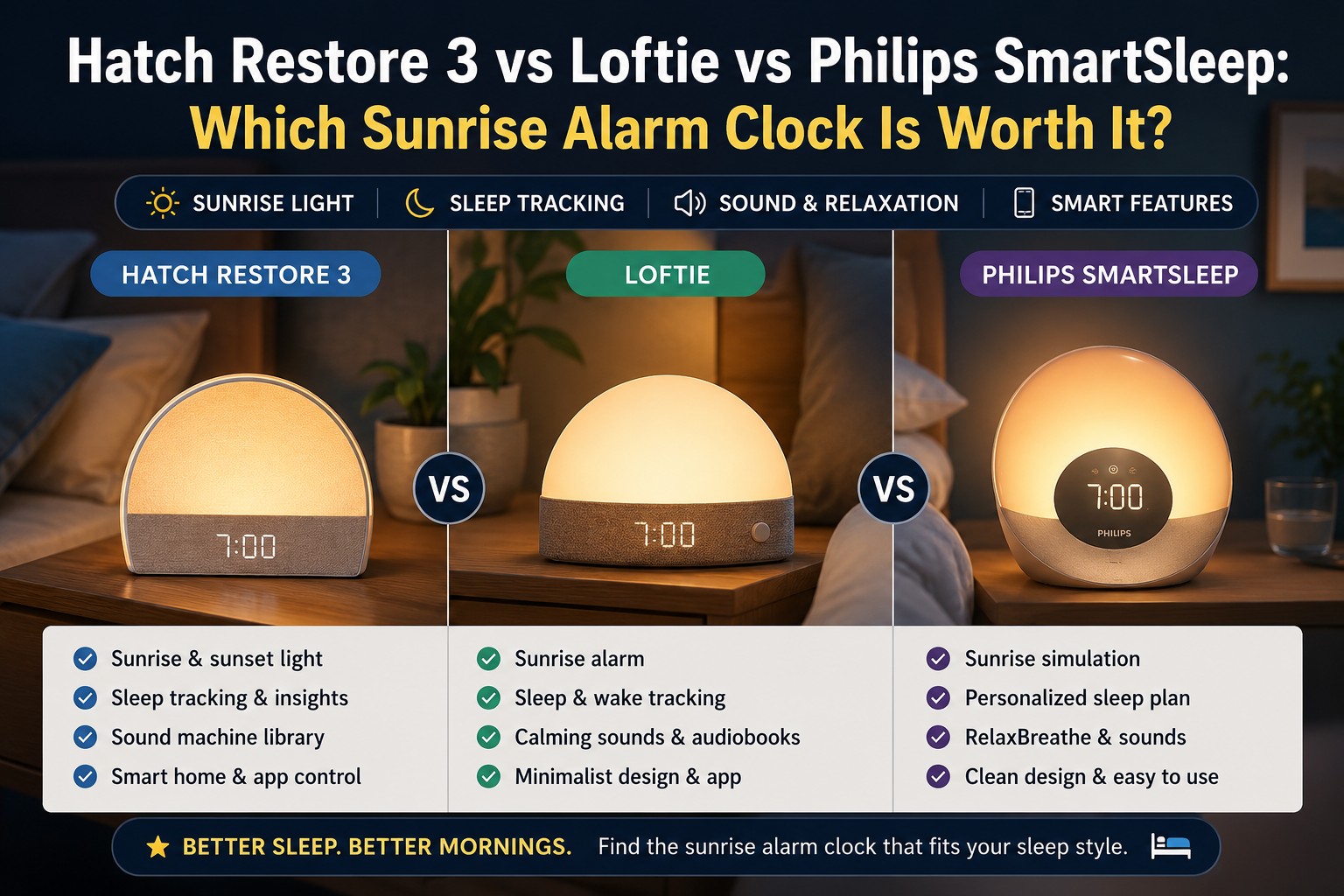
Hatch Restore 3 vs Loftie vs Philips SmartSleep is really a choice between three different sleep philosophies.
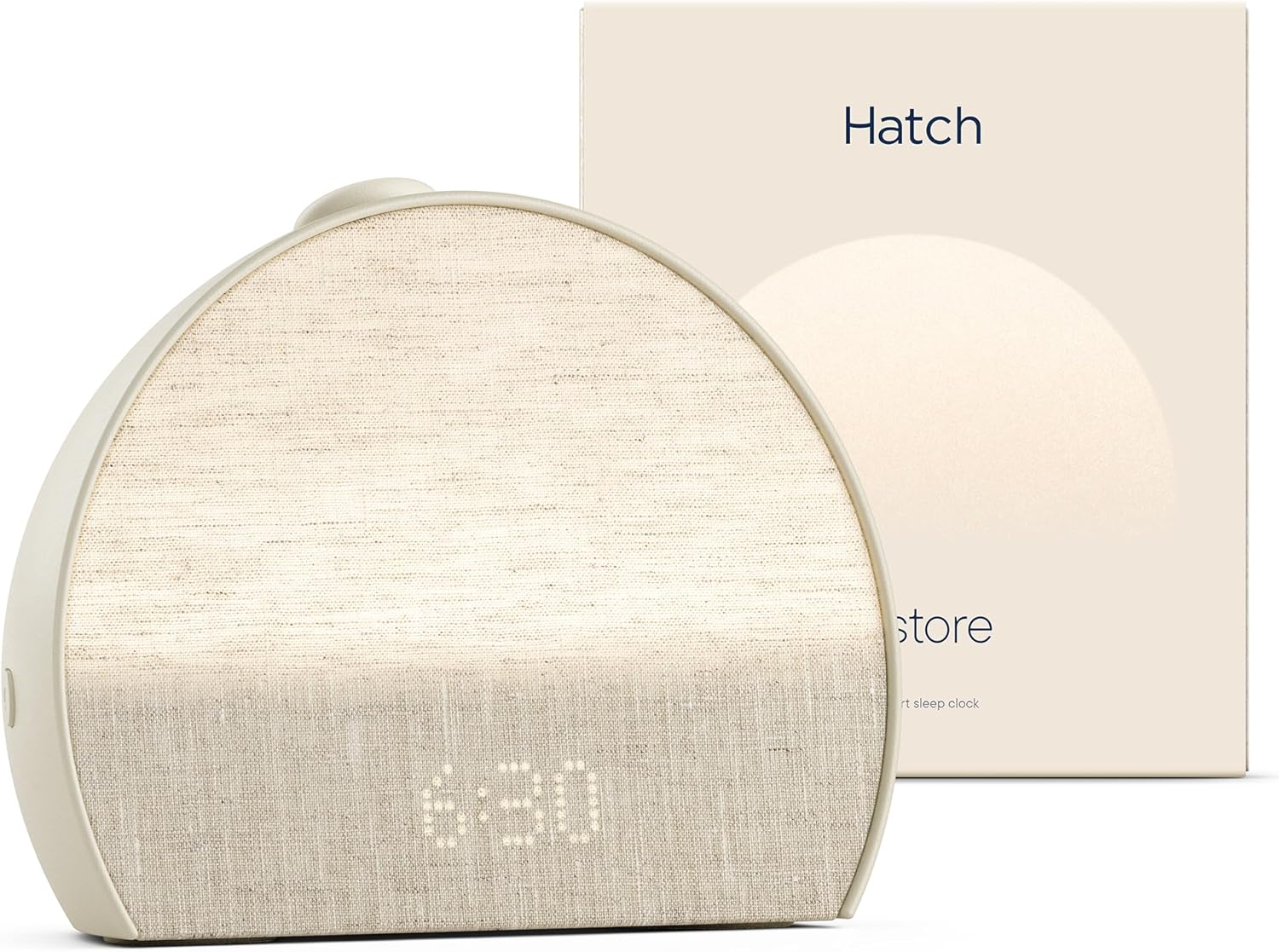
The Hatch Restore 3 is the best overall choice if you want the most complete smart sleep routine device. It combines a sunrise alarm, sound machine, bedside light, wind-down routines, app scheduling, and Hatch+ content in one polished device. Hatch lists Restore 3 as a smart sleep clock designed to help build gentle, phone-free sleep routines, with a 30-night bedside trial, free shipping and returns, and a 1-year warranty.
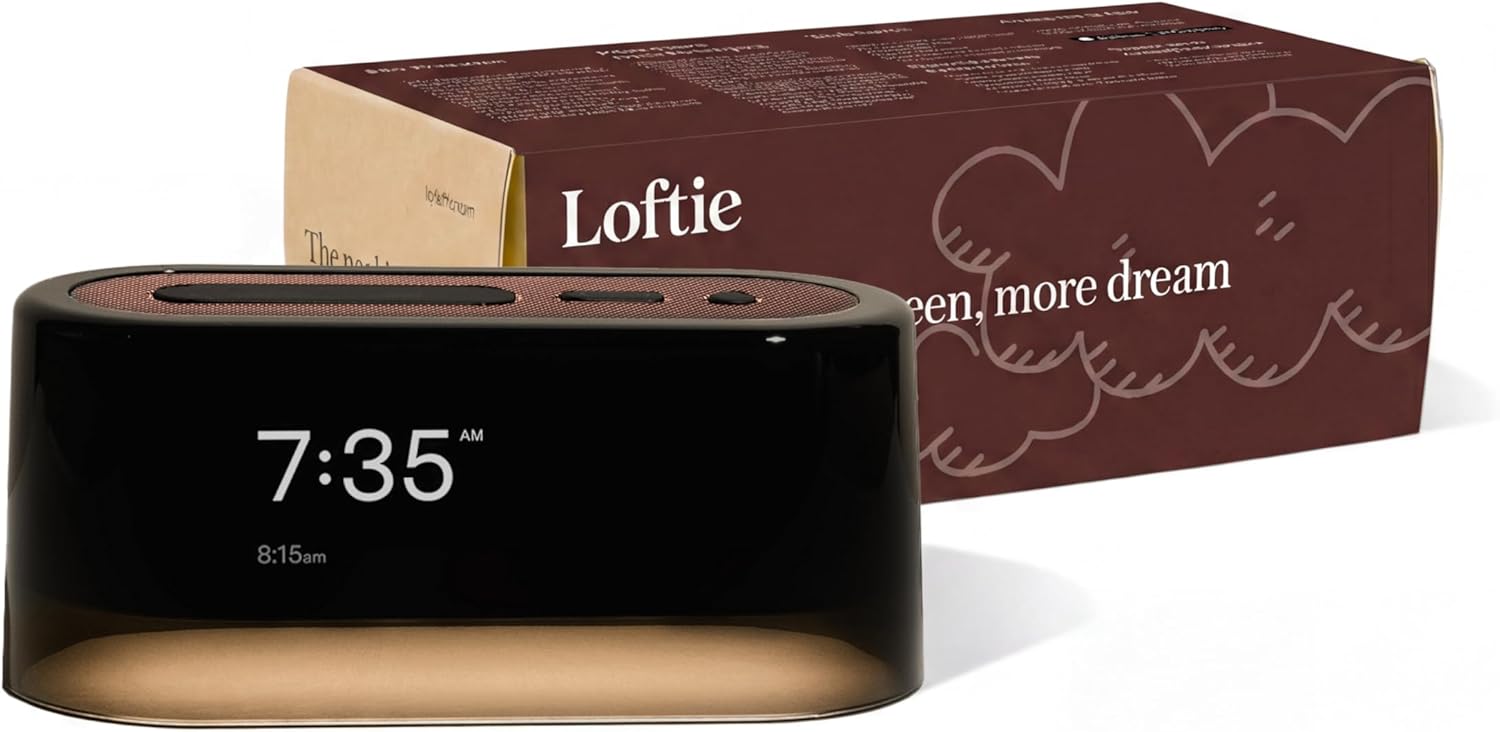
The Loftie Clock is the best choice if your main goal is getting your phone off the nightstand. It is not a true sunrise alarm by itself, but it has a gentle two-phase alarm, blackout mode, nightlight, offline functionality, Bluetooth speaker support, and 100+ built-in audio tracks with no required subscription. Loftie also says the Clock is not a sunrise alarm unless paired with the Loftie Lamp.
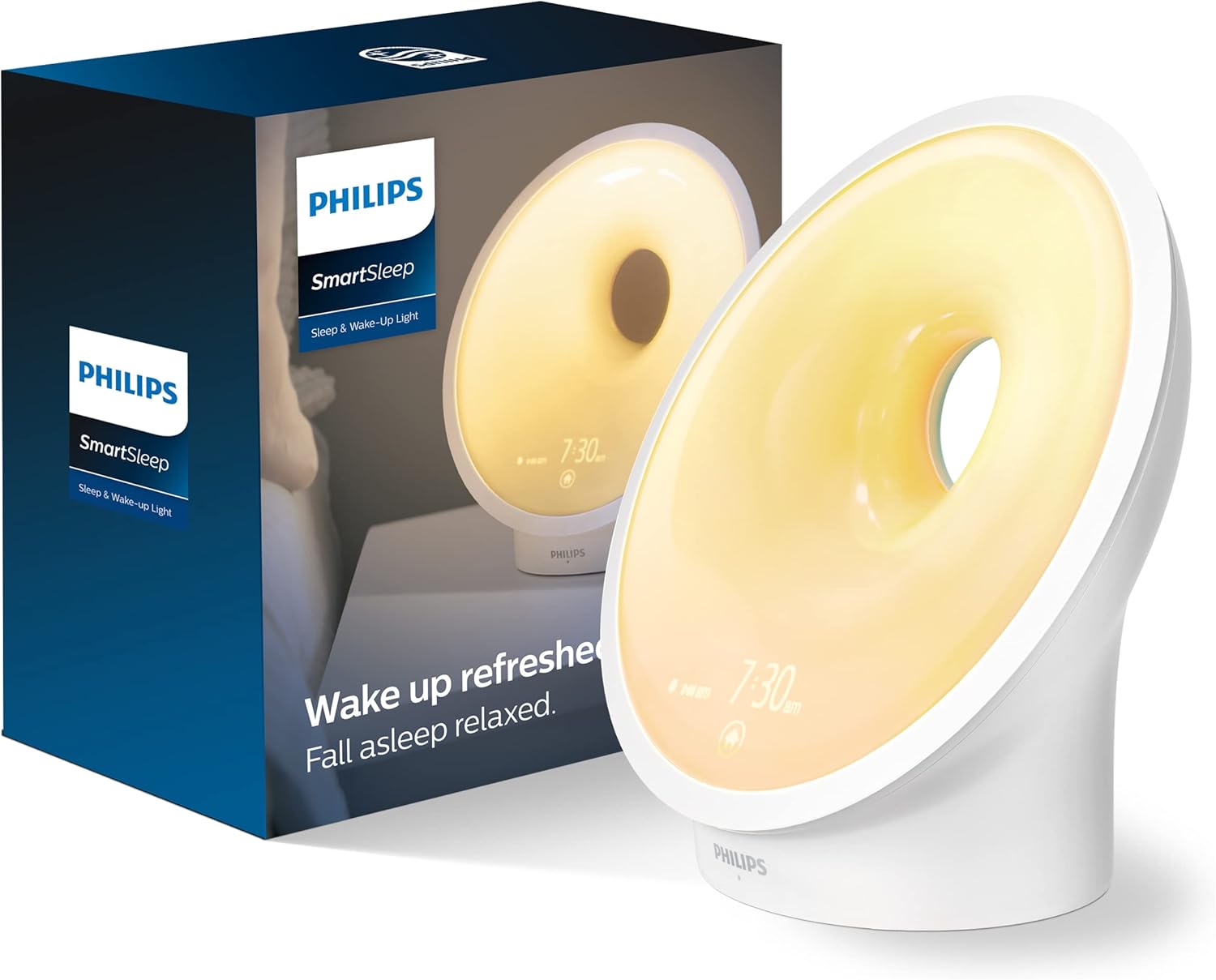
Philips SmartSleep is the best choice if you want the strongest light-first wake-up experience without turning your alarm clock into a content platform. For this comparison, I’m focusing mostly on the Philips SmartSleep Sleep and Wake-Up Light HF3650/60, the more premium current Philips option. Philips lists it with simulated sunrise and sunset, RelaxBreathe, multiple lights and sounds, 25 brightness settings, 310 lux max light level, 7 wake-up sounds, FM radio, AUX input, and no smartphone control.
My recommendation:
Buyer Type | Best Pick |
|---|---|
Best overall smart sleep clock | |
Best true phone-free alarm clock | |
Best sunrise light experience | |
Best for guided wind-down routines | |
Best without a required subscription | |
Best for people who hate apps | |
Best for meditation, stories, and sleep audio | |
Best for simple light-based waking | |
Best for couples with the same wake time | |
Best for people with inconsistent schedules |
Why This Comparison Matters
Most alarm clocks wake you up by startling you.
These devices try to do something better. They use light, sound, routines, and lower-friction bedtime habits to make waking up feel less harsh.
That matters because a better alarm clock is not just about the morning. It is also about what happens the night before. The CDC recommends consistent bed and wake times, a quiet and relaxing bedroom, a cool sleep environment, and turning off electronic devices at least 30 minutes before bedtime. Harvard Health also notes that light can suppress melatonin, and blue light at night can do so more powerfully than other light types.
So the best sunrise alarm clock is not necessarily the one with the most features.
It is the one that helps you:
- Put your phone away
- Wind down consistently
- Wake up gradually
- Keep the bedroom darker at night
- Avoid harsh alarm sounds
- Build a repeatable routine
- Actually get out of bed
That is where Hatch Restore 3, Loftie, and Philips SmartSleep separate from one another.
Hatch Restore 3 vs Loftie vs Philips SmartSleep Comparison Table
Feature | |||
|---|---|---|---|
 |  |  | |
Best For | Full smart sleep routine | Phone-free alarm and sleep audio | Best light-based wake-up |
True Sunrise Alarm | Yes | No, unless paired with Loftie Lamp | Yes |
Main Wake Style | Gradual light plus sound routine | Two-phase sound alarm | Gradual sunrise light plus sound |
Wind-Down Features | Light, sound, meditations, stories, Hatch+ content | White noise, meditations, stories, wellness tracks | Sunset simulation and RelaxBreathe |
Subscription | Hatch+ expands content | No subscription required for core use | No subscription |
App Needed | Yes for setup and scheduling | Yes for initial setup, then optional | No smartphone control on HF3650 |
Phone-Free After Setup | Mostly, if routines are planned | Yes | Yes |
Blackout/Dark Room Friendly | Yes, but app setup matters | Excellent blackout mode | Display can switch off |
Built-In Audio | Yes | 100+ tracks | 7 wake sounds, 3 relaxation sounds, FM radio |
Best Bedside Light | Hatch Restore 3 | Loftie Clock has nightlight, but not sunrise | Philips SmartSleep |
Best for App-Free Simplicity | Fair | Good | Excellent |
Best for Content | Hatch Restore 3 | Loftie Clock | Philips is simpler |
Biggest Drawback | Subscription and app reliance | Not a true sunrise alarm alone | Less smart/content-rich |
Price |  | | |
Best Overall: Hatch Restore 3
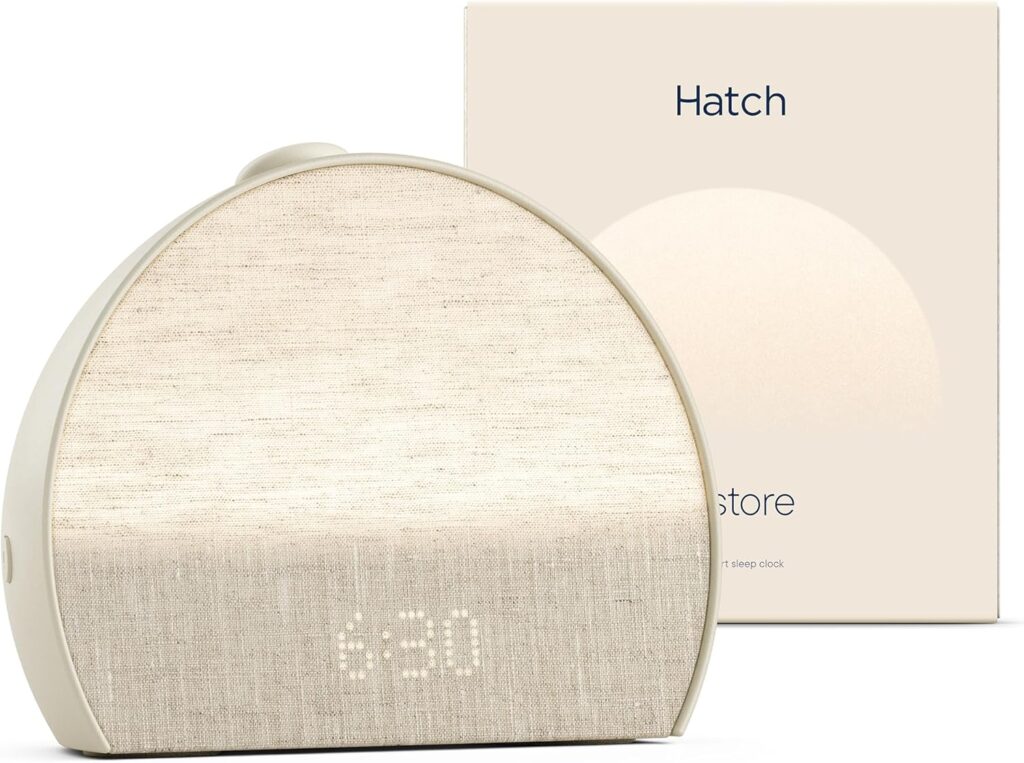
The Hatch Restore 3 is the best overall pick in this comparison because it does the most in one bedside device.
It is a sunrise alarm, sound machine, wind-down tool, bedside light, and sleep routine builder. Hatch lists Restore 3 at an affordable price and describes it as a smart sleep clock for building gentle, phone-free sleep routines. It also includes 30 days of Hatch+ with purchase.
That last part matters because Hatch is not just selling an alarm clock. It is selling a bedtime system.
Where Hatch Restore 3 wins
Hatch wins on routine.
If your main sleep problem is that you scroll too long, fall asleep inconsistently, wake up harshly, or need a structured wind-down ritual, Hatch is the strongest choice.
It is especially good for:
- People trying to replace a phone alarm
- Adults who like guided routines
- People who want a sunrise alarm plus sound machine
- Anyone who likes sleep stories, meditations, or soundscapes
- Bedrooms where design matters
- Couples who wake at the same time
- People who want one device to manage sleep and wake routines
A 2026 Prevention review said the Restore 3 setup uses the Hatch app for Wi-Fi, routines, and repeat alarms, and the reviewer found the gradual light and nature sound wake-up calmer than a traditional phone alarm. The same review also notes the device is a significant investment and that Hatch+ costs $4.99 per month or $49.99 per year after the trial.
Where Hatch Restore 3 falls short
Hatch is not the best choice if you want a simple, one-time purchase.
The device works best when you use the app to set routines. That can still support a phone-free bedroom once everything is scheduled, but it is not the same as a purely app-free device. Prevention’s reviewer also pointed out that Hatch is less ideal when partners share a room but wake at different times, because a gentle sunrise routine can disturb the other person.
The subscription is the other issue. You can still use the device, but Hatch+ is part of the full experience.
Who should buy the Hatch Restore 3?
Buy Hatch Restore 3 if you want:
- The best overall sleep routine device
- A sunrise alarm plus sound machine
- Guided wind-down content
- A polished modern bedside clock
- Gentle wake-up routines
- App-based scheduling
- Meditations, stories, and soundscapes
- A device that makes your nightstand feel more intentional
Who should skip it?
Skip Hatch Restore 3 if:
- You hate subscriptions
- You want no app involvement
- You and your partner wake at different times
- You only want a bright sunrise lamp
- You want the cheapest option
- You prefer simple physical controls
Best Phone-Free Pick: Loftie Clock
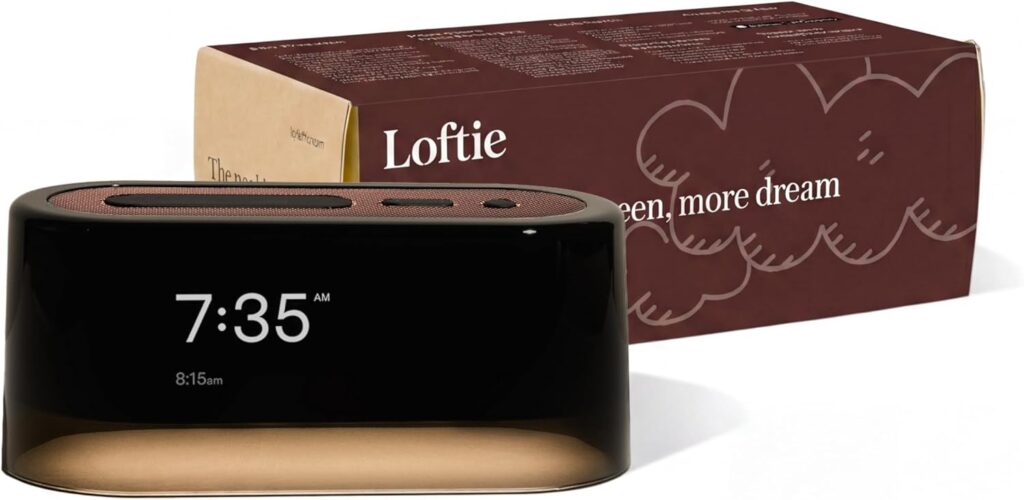
The Loftie Clock is the best pick if your main goal is to get your phone off the nightstand.
Loftie is not a true sunrise alarm on its own. That is important. Loftie says the Clock is not a sunrise alarm, though the nightlight can turn on with alarms, and the Loftie Lamp is the light-based wake-up product.
So why include it here?
Because many people searching for Hatch vs Loftie vs Philips are not only comparing light. They are comparing sleep routine devices. In that category, Loftie is one of the strongest phone-free options.
Where Loftie wins
Loftie wins on simplicity without feeling basic.
The Clock has:
- Gentle two-phase alarm
- Customizable settings
- White noise and nature sounds
- Wellness content
- Bluetooth speaker
- Nightlight
- Blackout mode
- Offline functionality
- 100+ built-in audio tracks
- No required subscription
Loftie says you need the app and Wi-Fi for initial setup and software updates, but after that, you can enable No Wi-Fi Mode and use the clock without staying connected. It also says the device comes preloaded with 100+ original audio tracks and does not require a subscription.
That makes Loftie feel more like a true replacement for your phone alarm than Hatch does for some people.
Why Loftie is not the same as Hatch or Philips
The biggest difference is light.
Hatch and Philips are true sunrise alarm clocks. Loftie Clock is primarily an audio-first alarm clock with a nightlight. If you want the room to gradually brighten like a sunrise, the Clock alone is not enough.
But if your problem is phone dependence, Loftie may be better than both.
A 2026 Good Trade review described the Loftie Clock as a phone-free device with meditations, sound baths, playlists, white noise, and a two-phase alarm that begins gently before the final wake sound. The reviewer also noted that after setup, alarms, playlists, and white noise can be navigated directly on the clock.
Who should buy the Loftie Clock?
Buy Loftie if you want:
- A phone-free alarm clock
- No required subscription
- A strong sound machine
- A two-phase alarm
- Blackout mode
- Built-in meditations, stories, and sounds
- A minimalist bedside device
- Offline functionality after setup
Who should skip it?
Skip Loftie if:
- You specifically want a true sunrise alarm
- You want the strongest bedside light
- You want app-based sleep coaching built into the core device
- You want a full light-and-sound routine like Hatch
- You expect Philips-level light therapy style waking
Best Light-Based Wake-Up: Philips SmartSleep
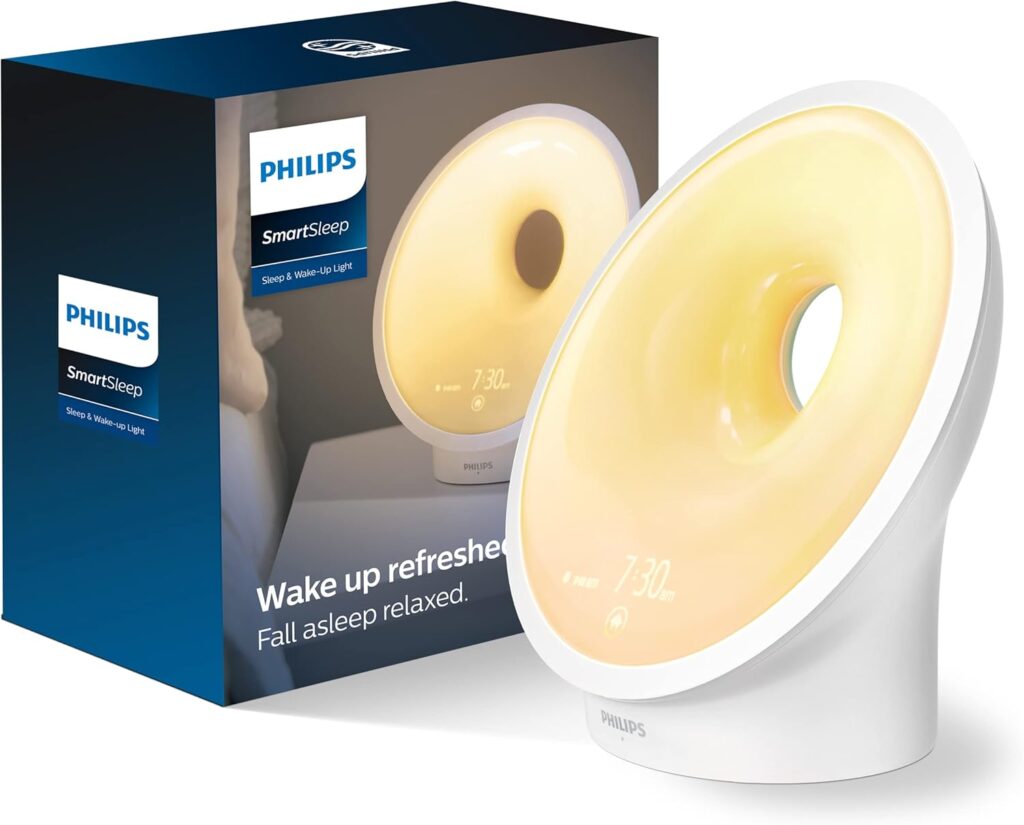
The Philips SmartSleep Sleep and Wake-Up Light HF3650/60 is the best choice if the sunrise light itself matters most.
Philips has been in this category for a long time, and the SmartSleep line is less about apps and content and more about light. The HF3650/60 gradually increases light before your alarm over 30 minutes, shifting from soft morning red to orange to bright yellow. It also has sunset simulation, RelaxBreathe, a midnight light, smart touch display, tap snooze, 25 brightness settings, 310 lux max light level, 7 wake-up sounds, 3 relaxation sounds, FM radio, and AUX input.
That is the cleanest “I want to wake up with light, not a phone” product in this comparison.
Where Philips SmartSleep wins
Philips wins on light quality and simplicity.
It does not try to be a meditation app, subscription platform, or smart-home lifestyle device. That is a strength if you want the alarm clock to be reliable, physical, and mostly self-contained.
It is especially good for:
- People who want a true sunrise alarm
- App-avoidant shoppers
- People who want no subscription
- Bedrooms where light quality matters most
- People who want FM radio
- People who like physical bedside control
- Anyone who wants a gentle wake-up without content overload
Philips also lists a cheaper SmartSleep Wake-Up Light HF3520/60 with colored sunrise simulation, sunset simulation, 5 natural wake sounds, and FM radio. Philips’ current Sleep and Wake-Up Lights page lists both HF3520/60 and HF3650/60, with HF3650/60 as the more premium Sleep and Wake-Up Light option.
Where Philips SmartSleep falls short
Philips is not the most modern sleep platform.
The HF3650/60 has no smartphone control, no app scheduler, and no streaming-style content library. Philips lists “Control by Smartphone” and “App enabled w/ alarm scheduler” as “No” for this model.
That is good if you want simplicity. It is bad if you want a Hatch-style routine builder.
Who should buy Philips SmartSleep?
Buy Philips SmartSleep if you want:
- The best light-first wake-up experience
- No subscription
- No required app
- Strong sunrise and sunset simulation
- RelaxBreathe wind-down support
- FM radio
- A physical bedside device
- A proven sunrise alarm category leader
Who should skip it?
Skip Philips if:
- You want guided meditations and sleep stories
- You want app-based scheduling
- You want a phone-free audio library like Loftie
- You want the modern design of Hatch
- You want lots of changing content
Major Differences Between Hatch Restore 3, Loftie, and Philips SmartSleep
1. Hatch is a sleep routine system
Hatch is best if you want structure.
It helps you build a wind-down and wake-up routine using light, sound, and guided content. It feels like a wellness device, not just an alarm clock.
2. Loftie is a phone replacement
Loftie is best if the real enemy is your smartphone.
It gives you alarms, audio, blackout mode, nightlight, and offline functionality without making the phone the center of the experience after setup.
3. Philips is a sunrise light first
Philips is best if you want the most straightforward light-based alarm.
It wakes you with gradual sunrise simulation and gives you sunset and breathing features without forcing you into a subscription or app ecosystem.
4. Loftie Clock is not a true sunrise alarm
This is the biggest buyer-confusion point.
If you want a light-based wake-up, do not buy the Loftie Clock alone. You would need to add the Loftie Lamp or choose Hatch or Philips instead.
5. The best product depends on what you are trying to fix
- If you wake up stressed, choose Hatch or Philips.
- If you scroll too much at night, choose Loftie or Hatch.
- If you hate subscriptions, choose Loftie or Philips.
- If you hate apps, choose Philips.
- If you want a full routine, choose Hatch.
- If you want the strongest light wake-up, choose Philips.
Light and Wake-Up Experience
Wake-Up Factor | Hatch Restore 3 | Loftie Clock | Philips SmartSleep |
|---|---|---|---|
True sunrise alarm | Yes | No | Yes |
Gradual wake light | Yes | Nightlight only | Yes |
Wake sound | Yes | Yes, two-phase | Yes |
Strongest light-based wake-up | Good | Not the right product alone | Excellent |
Best for harsh alarm replacement | Excellent | Excellent | Excellent |
Best for light-sensitive sleepers | Good | Good if using sound only | Excellent due to adjustable brightness |
Best for couples | Good if same schedule | Good for audio-based alarms | Good if same schedule |
Winner for sunrise: Philips SmartSleep
Winner for full light-and-sound routine: Hatch Restore 3
Winner for audio-first waking: Loftie Clock
Sleep Sounds and Wind-Down Features
Wind-Down Factor | Hatch Restore 3 | Loftie Clock | Philips SmartSleep |
|---|---|---|---|
White noise | Yes | Yes | Limited compared with Hatch/Loftie |
Nature sounds | Yes | Yes | Yes |
Meditations | Yes with Hatch+ content | Yes built in | No, not the main focus |
Sleep stories | Yes with Hatch+ content | Yes | No |
Sunset routine | Yes | Not the main feature | Yes |
Breathing guidance | Yes through content | Wellness content | RelaxBreathe built in |
Best for content variety | Hatch Restore 3 | Loftie Clock | Philips is simpler |
Best without subscription | Loftie Clock | Loftie Clock | Philips SmartSleep |
Winner for content: Hatch Restore 3
Winner for no-subscription audio: Loftie Clock
Winner for simple light-guided wind-down: Philips SmartSleep
App, Subscription, and Phone-Free Use
This is where the buying decision becomes clearer.
App and Subscription Factor | Hatch Restore 3 | Loftie Clock | Philips SmartSleep HF3650/60 |
|---|---|---|---|
App required for setup | Yes | Yes | No |
App needed for daily use | Helpful, especially for scheduling | No after setup if preferred | No |
Required subscription | No for basic use, but Hatch+ expands experience | No | No |
Paid content plan | Hatch+ | Loftie+ optional | No |
Works well without phone nearby | Yes, after routines are set | Yes | Yes |
Best for no app lifestyle | Fair | Very good | Excellent |
Best for no subscription | Good but limited | Excellent | Excellent |
Winner for app-free use: Philips SmartSleep
Winner for phone-free habits: Loftie Clock
Winner for app-powered routines: Hatch Restore 3
Design and Bedroom Experience
Design Factor | Hatch Restore 3 | Loftie Clock | Philips SmartSleep |
|---|---|---|---|
Most modern look | Hatch Restore 3 | Loftie Clock | Philips is more functional |
Smallest bedside footprint feel | Loftie Clock | Loftie Clock | Philips is larger |
Best bedside lamp replacement | Hatch or Philips | Limited | Philips |
Best blackout mode | Good | Excellent | Display can turn off |
Best for minimal bedrooms | Loftie | Loftie | Philips is more noticeable |
Best for wellness-style nightstand | Hatch | Loftie | Philips |
Hatch looks the most like a modern wellness product.
Loftie looks the most like a minimalist alarm clock.
Philips looks the most like a dedicated light therapy-style wake-up lamp.
None of these are ugly, but they send different signals on a nightstand.
Pros and Cons
Hatch Restore 3 Pros
- Best overall smart sleep routine device
- True sunrise alarm
- Strong sound machine features
- Bedtime and wake-up routines
- Hatch+ content library
- Modern design
- Good for meditation, stories, soundscapes, and light routines
- 30-night bedside trial
- Strong choice for people replacing phone alarms
Hatch Restore 3 Cons
- Hatch+ subscription adds ongoing cost
- App setup and scheduling matter
- Not ideal for couples with different wake times
- More expensive than simple sunrise alarms
- Can feel like too much if you only want a basic light alarm
Loftie Clock Pros
- Best phone-free alarm clock
- No required subscription
- 100+ built-in audio tracks
- Two-phase alarm
- Blackout mode with no light leakage
- Offline mode after setup and updates
- Bluetooth speaker
- Built-in nightlight
- Good for people trying to remove phones from the bedroom
Loftie Clock Cons
- Not a true sunrise alarm by itself
- Requires app and Wi-Fi for initial setup
- Light is a nightlight, not a full wake-up lamp
- Optional Loftie+ adds another ecosystem
- Less useful if your main goal is bright sunrise simulation
Philips SmartSleep Pros
- Best light-first sunrise wake-up
- No subscription
- No app required on HF3650/60
- Sunrise and sunset simulation
- RelaxBreathe wind-down feature
- 25 brightness settings
- Up to 310 lux
- FM radio and AUX input
- Display can switch off
- Strong choice for simple, physical bedside control
Philips SmartSleep Cons
- Less modern than Hatch or Loftie
- No smartphone control on HF3650/60
- No large meditation or story library
- Larger lamp-style footprint
- Not as flexible for complex routines
Which One Should You Buy?
Buy Hatch Restore 3 if you want a full sleep routine
Choose Hatch if you want a device that helps with both bedtime and morning.
It is the best pick if you like guided wind-downs, soundscapes, sunrise alarms, and scheduled routines. It is also the strongest choice if you want your nightstand to feel like a sleep system.
Buy Loftie if you want your phone out of the bedroom
Choose Loftie if your biggest sleep problem is phone dependence.
It is not the best sunrise alarm by itself, but it is the best alarm-clock replacement for people who want built-in audio, blackout mode, and no required subscription.
Buy Philips SmartSleep if you want the best sunrise light
Choose Philips if you want a straightforward wake-up light that does not depend on apps, subscriptions, or content libraries.
It is the best pick for people who want to wake up with light, use physical controls, and avoid turning bedtime into another app experience.
Final Verdict: Hatch Restore 3 vs Loftie vs Philips SmartSleep
The Hatch Restore 3 is the best overall smart sleep clock because it combines sunrise light, sound, routines, and sleep content in the most polished package.
The Loftie Clock is the best phone-free alarm clock because it replaces your phone with a two-phase alarm, blackout mode, built-in audio, offline functionality, and no required subscription.
The Philips SmartSleep is the best sunrise alarm clock if light quality and simplicity matter most. It is the best choice for people who want a gentle wake-up light without paying for another content subscription.
My final recommendation is simple:
Buy Hatch Restore 3 for the best full sleep routine. Buy Loftie if your phone is the problem. Buy Philips SmartSleep if you want the best app-free sunrise wake-up light.
That is the clearest answer in the Hatch Restore 3 vs Loftie vs Philips SmartSleep comparison.
FAQs
Is Hatch Restore 3 better than Loftie?
Hatch Restore 3 is better than Loftie if you want a true sunrise alarm, app-based sleep routines, guided wind-down content, and a more complete light-and-sound sleep system. Loftie is better if you want a phone-free alarm clock with built-in audio, blackout mode, and no required subscription.
Is Loftie a sunrise alarm clock?
No. The Loftie Clock is not a true sunrise alarm clock by itself. Loftie says the Clock’s nightlight can turn on with alarms, but if you want a light-based wake-up, you need the Loftie Lamp or a different sunrise alarm such as Hatch Restore 3 or Philips SmartSleep.
Is Philips SmartSleep better than Hatch Restore 3?
Philips SmartSleep is better than Hatch Restore 3 if you want a simple, app-free, subscription-free sunrise wake-up light. Hatch Restore 3 is better if you want a fuller sleep routine with soundscapes, meditations, stories, scheduled routines, and a more modern smart-device experience.
Does Hatch Restore 3 require a subscription?
Hatch Restore 3 includes 30 days of Hatch+ with purchase, and Hatch+ expands the sleep content experience. A 2026 Prevention review listed Hatch+ at $4.99 per month or $49.99 per year after the trial.
Does Loftie require a subscription?
No. Loftie says the Clock comes preloaded with 100+ original audio tracks and does not require a subscription. Loftie+ is optional and adds app-based features such as sleep coaching, lessons, app blocking, and custom wind-down routines.
Which is best for people who hate apps?
Philips SmartSleep is the best choice for people who hate apps, especially the HF3650/60 model, which Philips lists with no smartphone control and no app-enabled alarm scheduler. Loftie is also good after initial setup, while Hatch depends more on app scheduling.
Which is best for heavy sleepers?
Philips SmartSleep may be the best starting point for heavy sleepers who respond well to bright light because it has strong sunrise simulation and adjustable brightness. Hatch Restore 3 is also a good choice because it combines light and sound routines. Loftie may work well for people who prefer sound-based waking, but it does not provide a true sunrise wake-up by itself.
Which is best for couples?
Hatch Restore 3 and Philips SmartSleep work best for couples who wake at the same time. If partners have different schedules, any sunrise alarm can disturb the other person. Loftie may be easier to use as a sound-based alarm, but shared bedrooms still require careful volume and alarm planning.
Which one is most worth the money?
Hatch Restore 3 is most worth the money if you will use the full routine system. Loftie is most worth it if it successfully removes your phone from the bedroom. Philips SmartSleep is most worth it if you want a durable, app-free sunrise lamp without a subscription.
Other Interesting Articles
- Best Air Purifier for Home: Top 5 Picks That Actually Make a Difference
- PuroAir 240 vs Shark Air Purifier: Which One Should You Buy?
- PuroAir 240 vs Sans Air Purifier: Which One Should You Buy?
- PuroAir 240 vs Levoit 300: Which Air Purifier Is the Better Buy?
- PuroAir 240 vs PuroAir 400: Which One Actually Fits Your Home?
Author Box
HappyHomeNerd helps readers choose practical home comfort products without overbuying. Our guides focus on the details that matter in real homes: sleep routines, bedroom lighting, noise, app control, subscriptions, ease of use, maintenance, smart features, and everyday comfort.
Final verdict: Hatch Restore 3 is best for full sleep routines, Loftie is best for phone-free alarm habits, and Philips SmartSleep is best for a simple, subscription-free sunrise wake-up light.